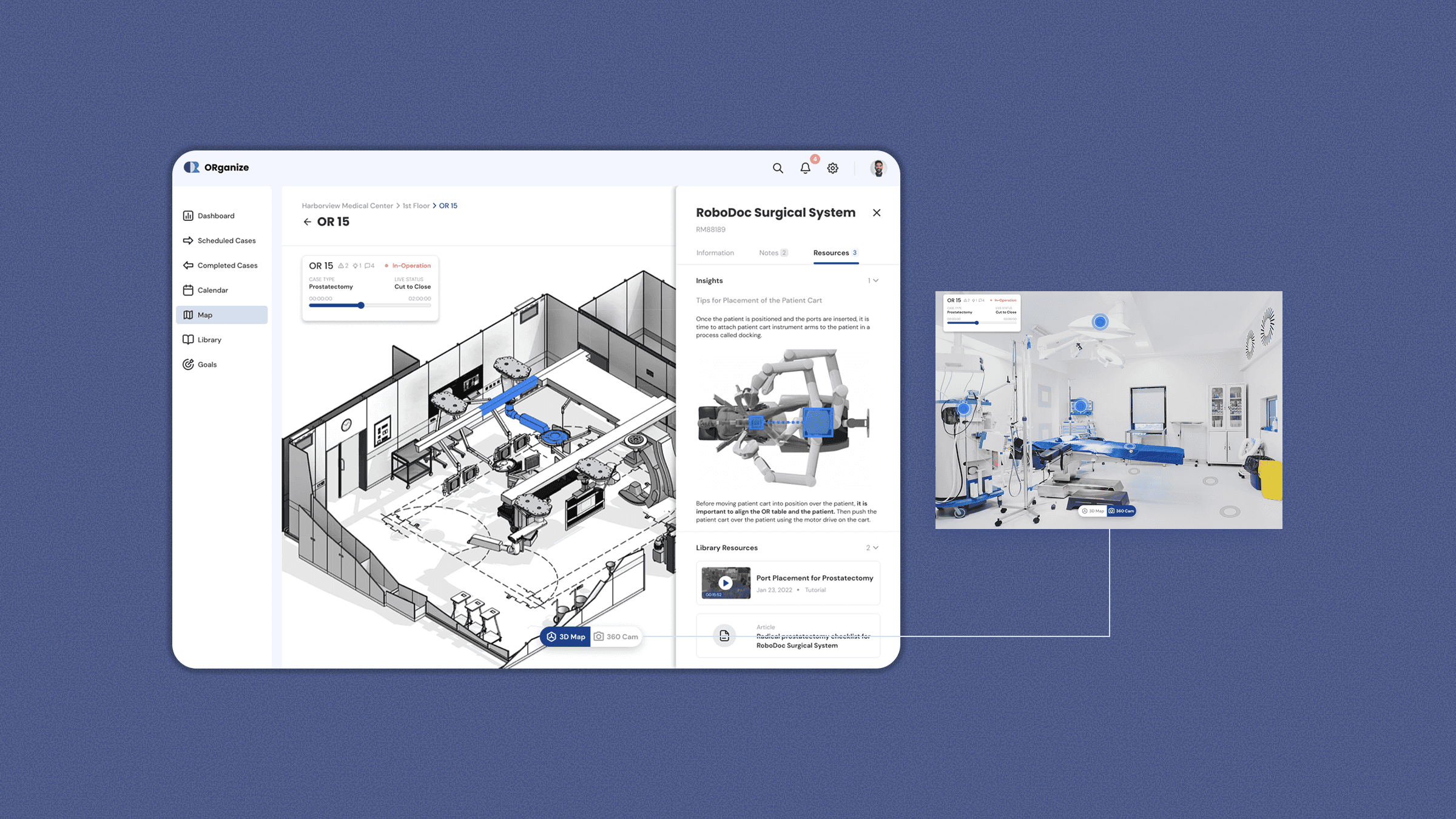
State clarity beats density
Teams needed the current procedure state at a glance, not more controls competing for attention.
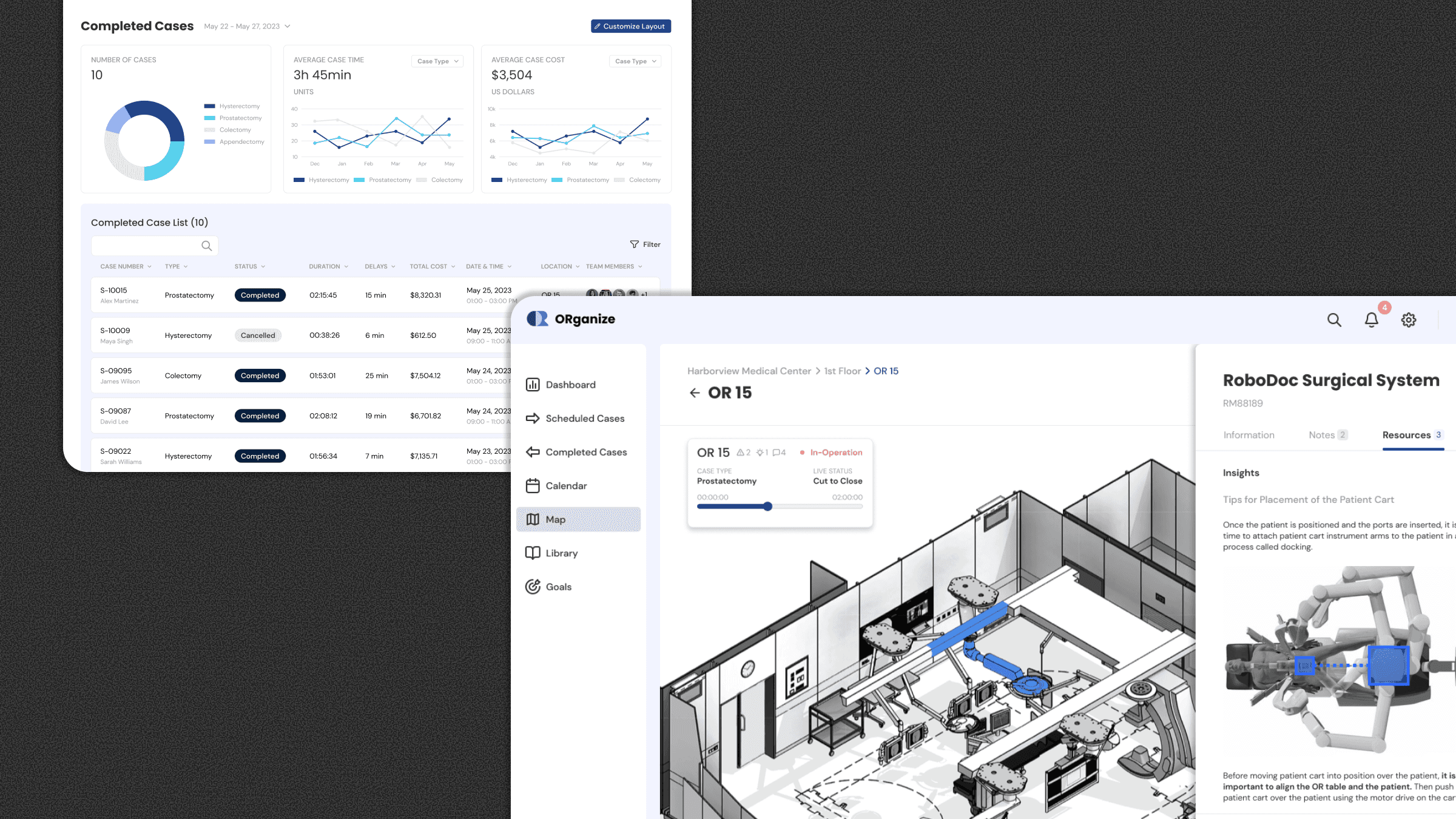
Case study
Impact: Designed a centralized OR workflow that improved coordination across robotics teams under clinical pressure.
Problem
OR teams relied on fragmented systems and manual coordination, which increased cognitive load during time-sensitive robotics procedures.
Solution
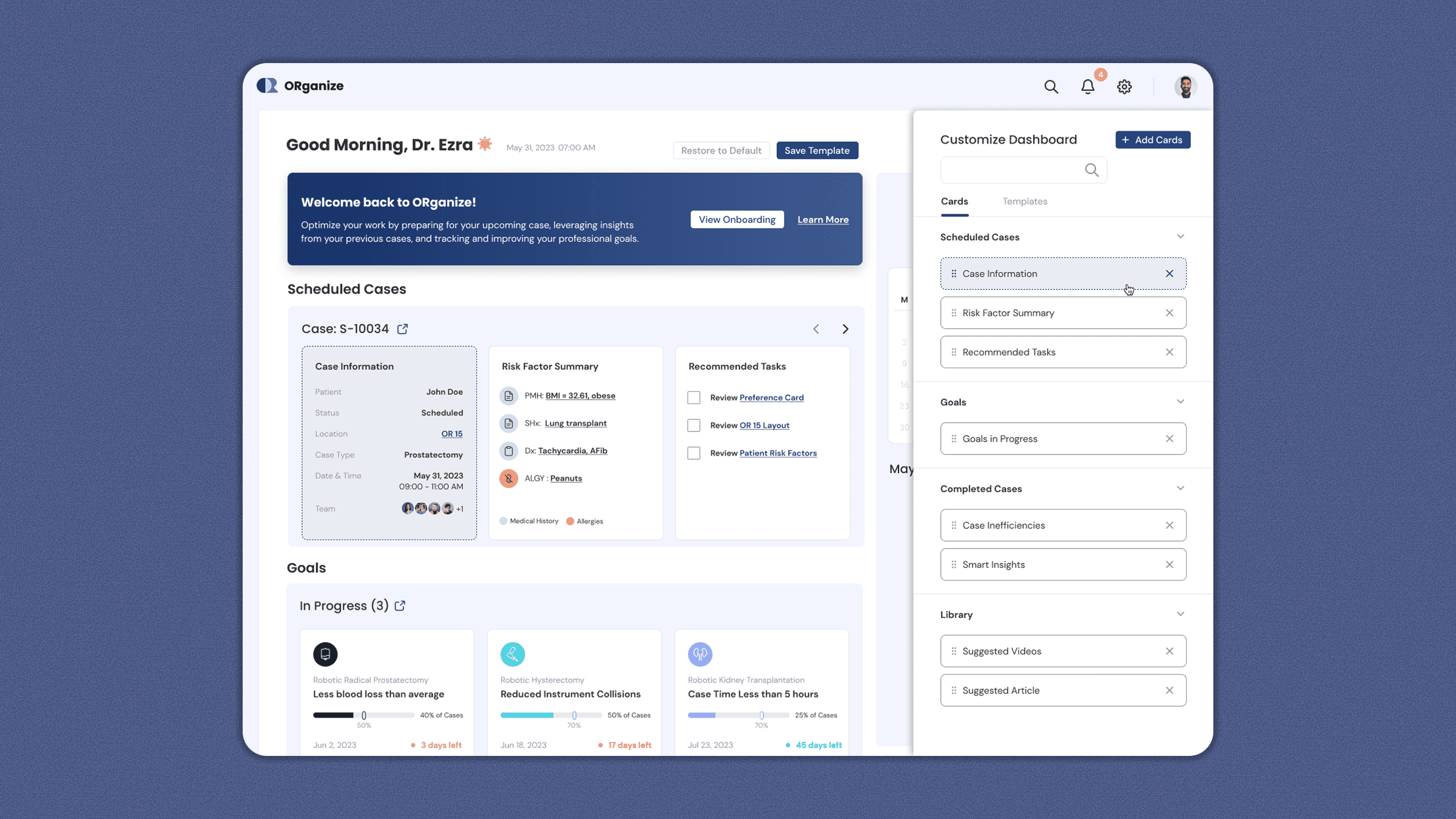
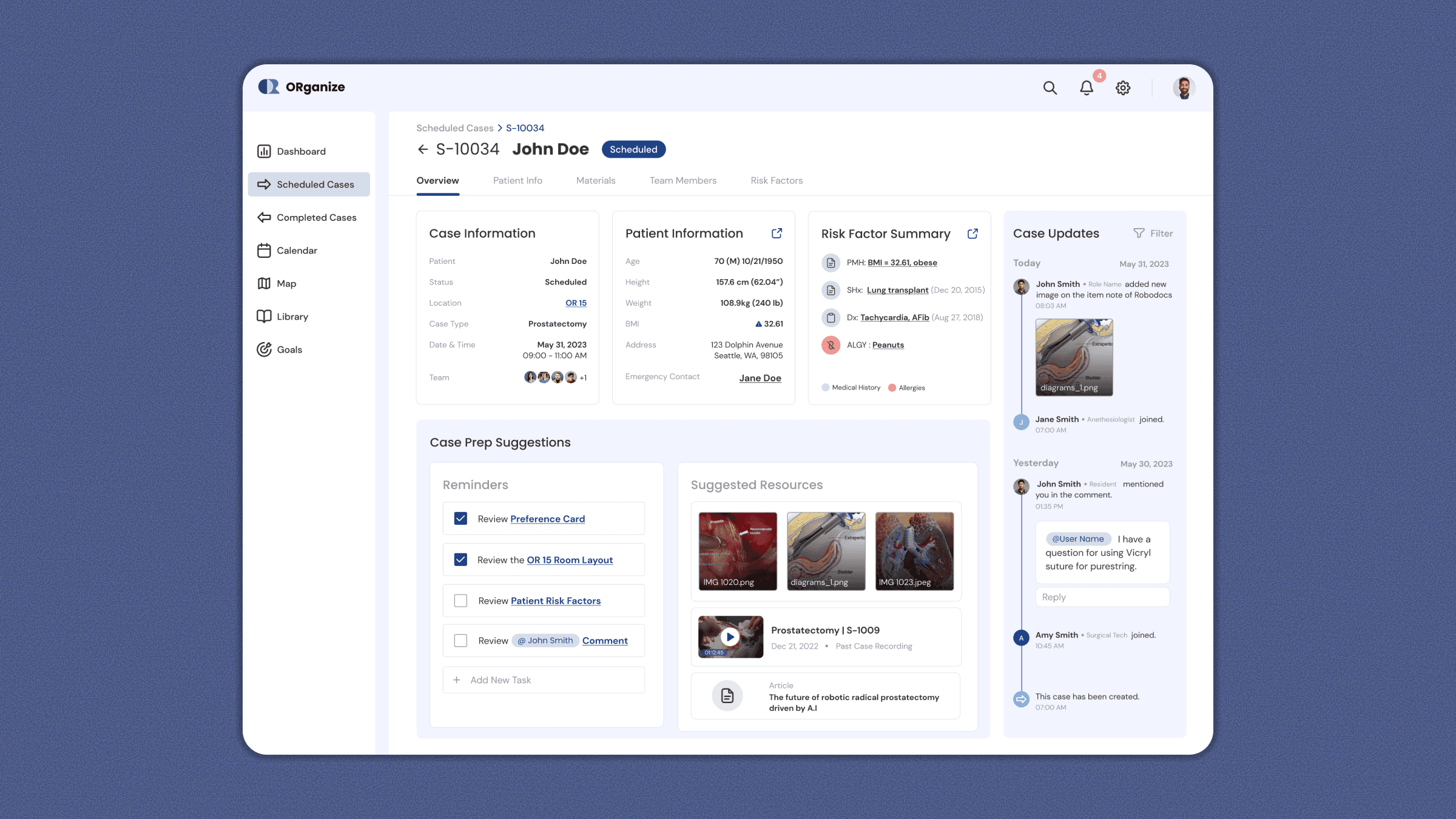
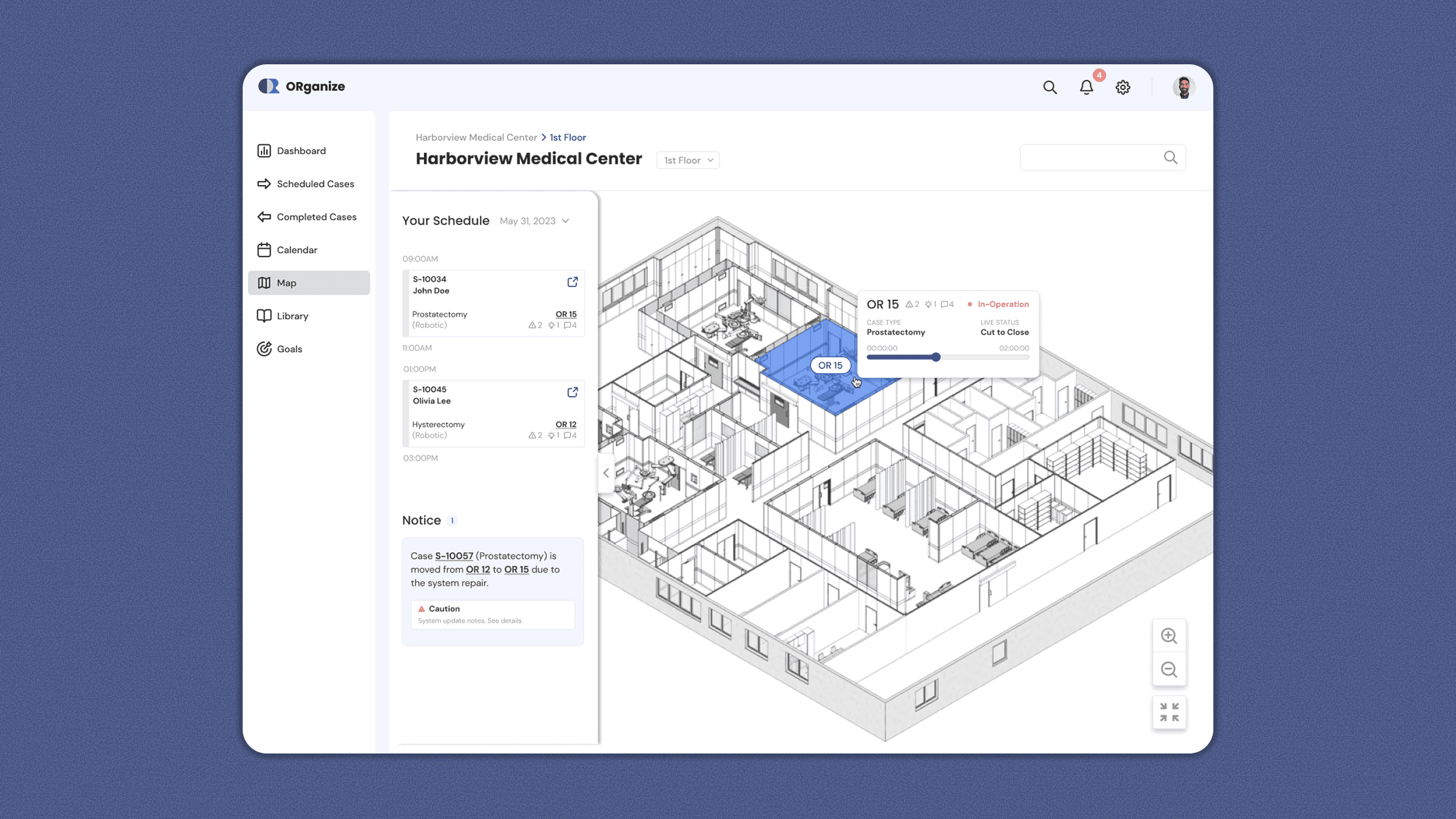
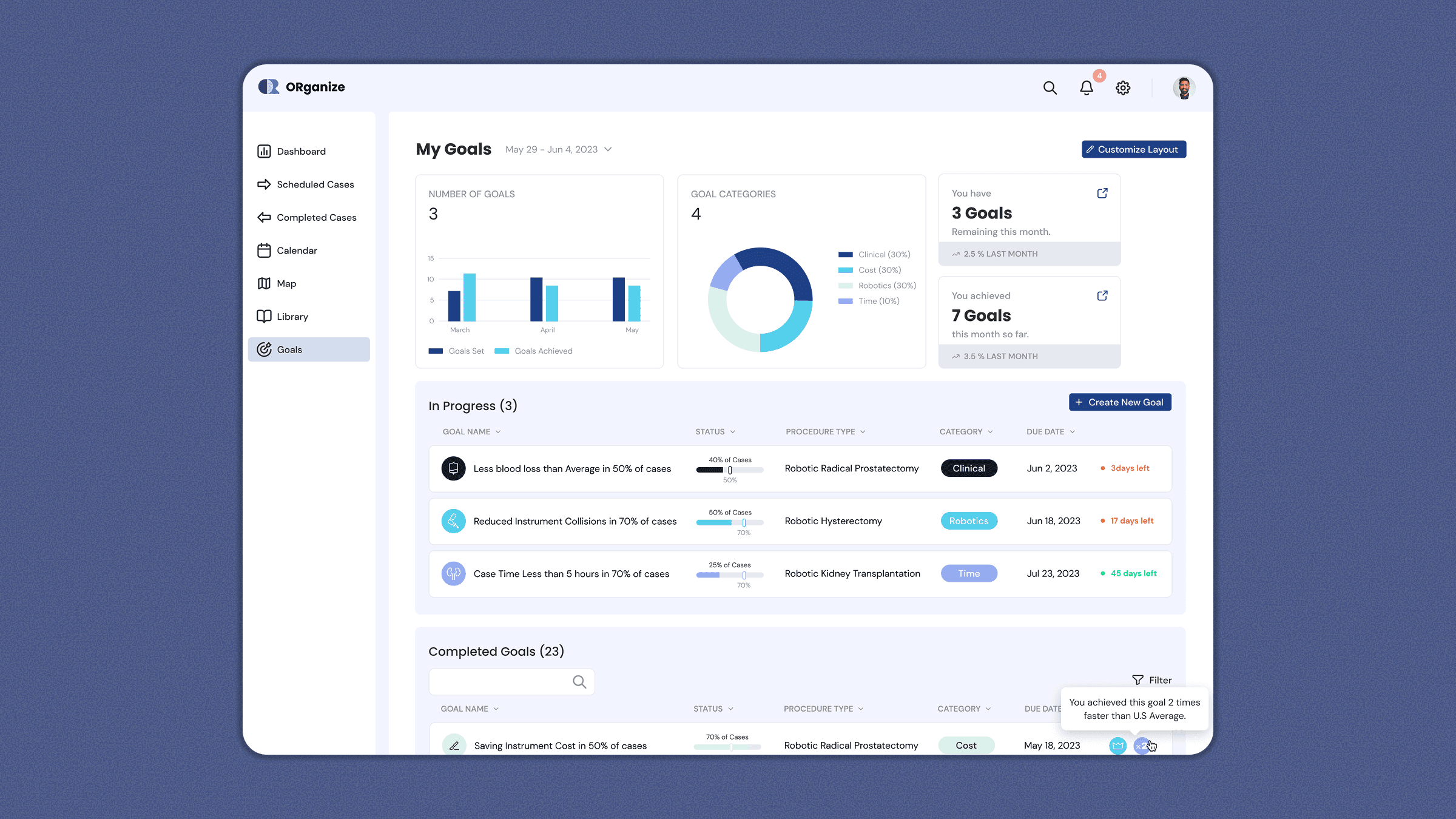
A unified command workflow that surfaces procedure state, device readiness, and role-specific actions in one system.
Impact
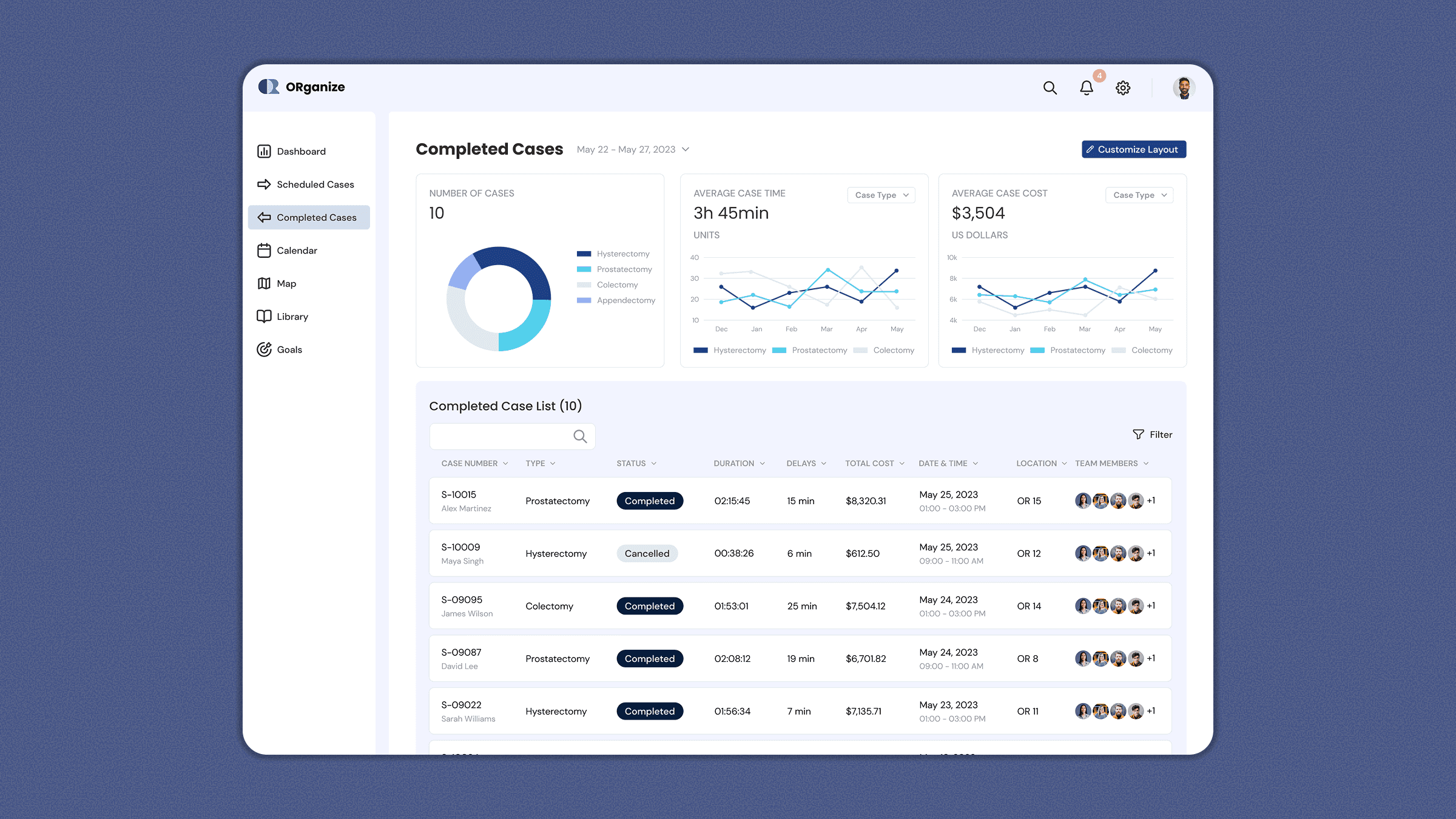
Reduced handoff friction and improved team alignment in high-stakes clinical environments.
Surgical robotics teams were juggling multiple tools and verbal updates while managing strict procedural timing.
The key risk was not just speed, but reliability: when status lived in too many places, teams lost shared situational awareness.
Methodology: contextual inquiry with OR staff, workflow mapping across pre-op to intra-op transitions, and iterative scenario walkthroughs with SMEs.
Teams needed the current procedure state at a glance, not more controls competing for attention.
Surgeons, nurses, and support staff required different next steps, so generic dashboards created ambiguity.
Most coordination errors clustered around setup and handoff moments, which became the primary design focus.
We prioritized a shared procedural spine with progressive disclosure so teams could stay aligned without information overload.
Critical alerts and readiness checks were designed to be unmistakable but low-noise during active procedures.
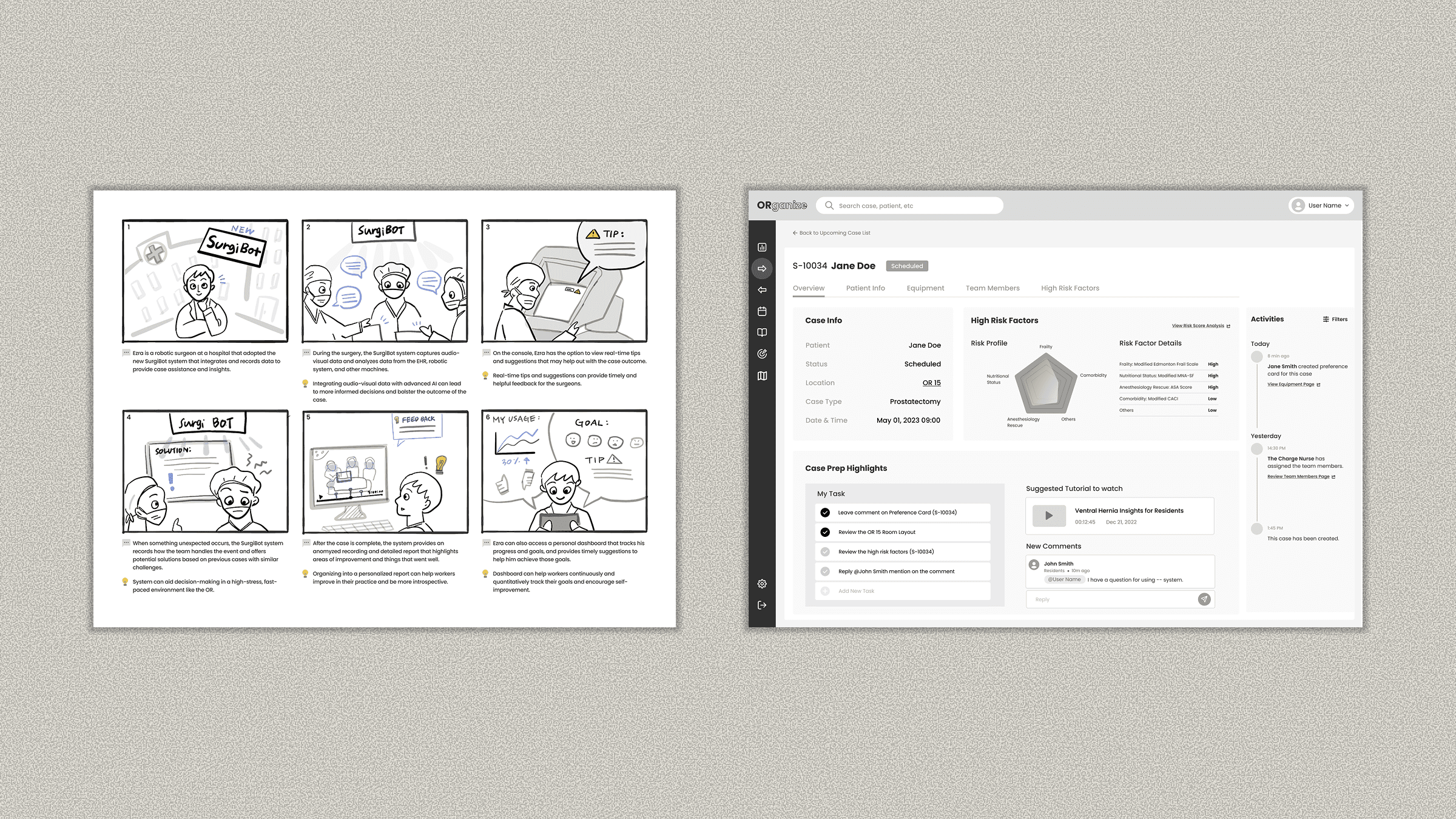
The final system provided a unified operational view from setup through execution, with role-specific guidance at each step.
The interface reduced coordination overhead and made procedural status legible across the room.