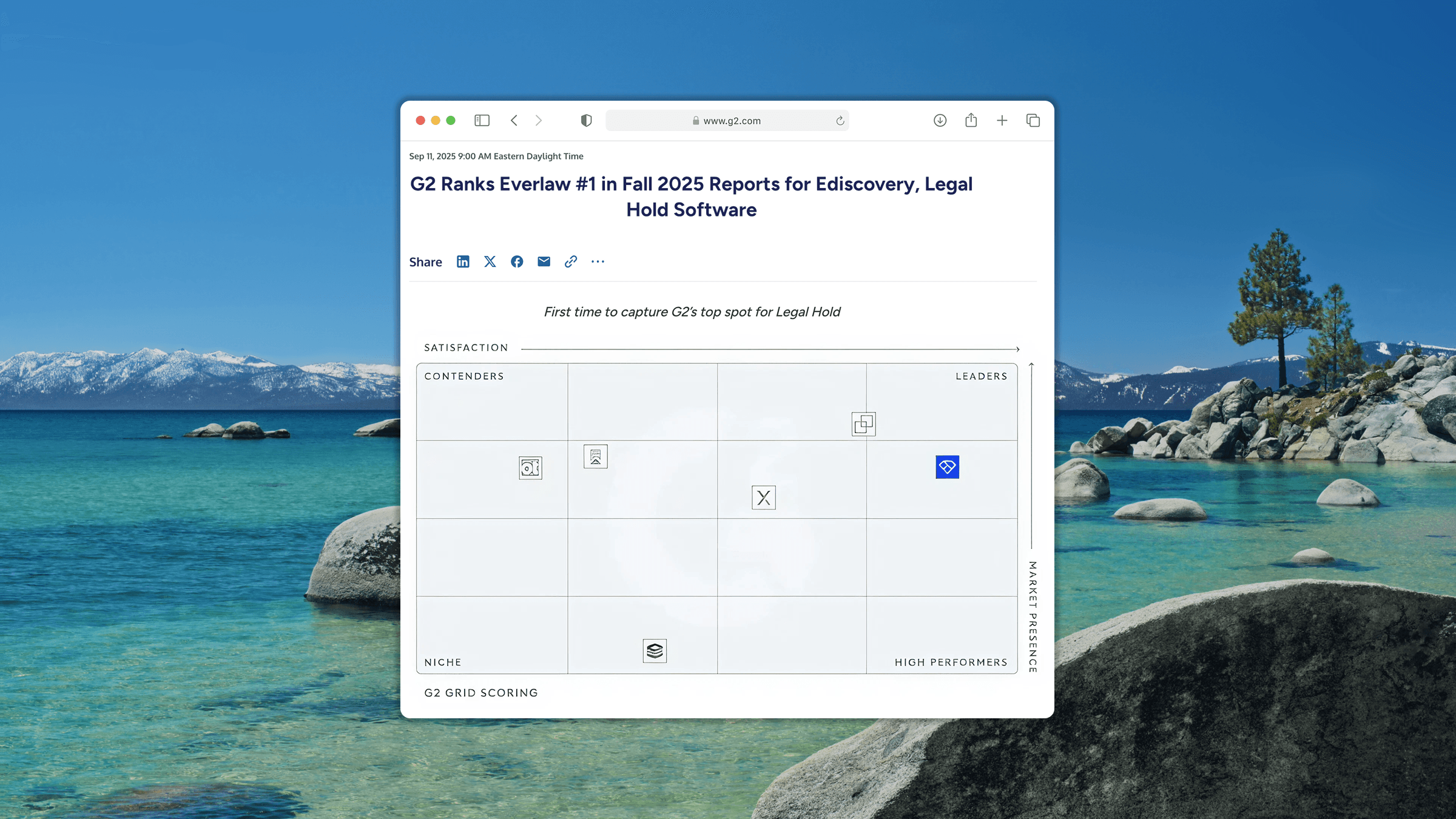
Logic is table stakes
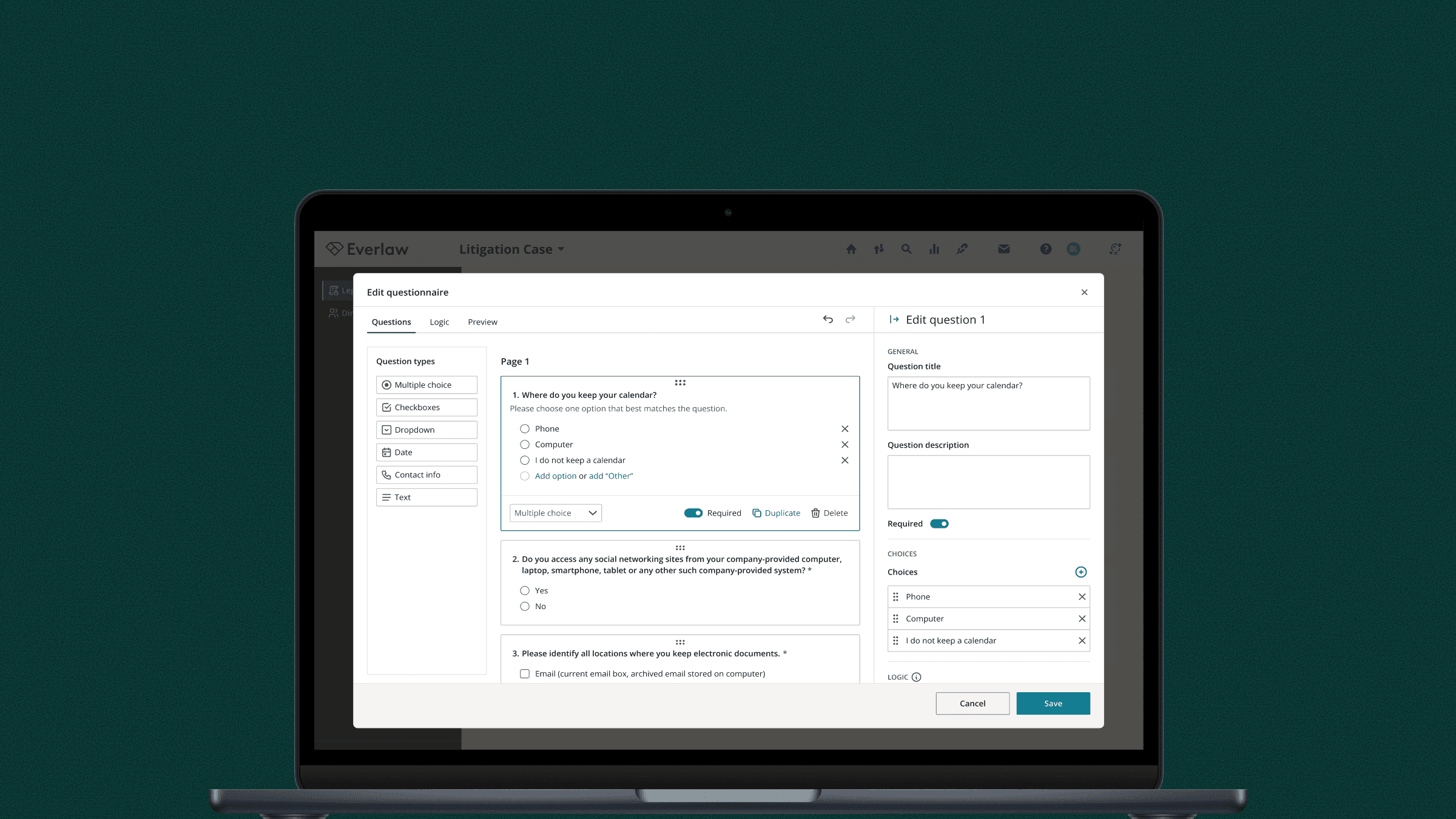
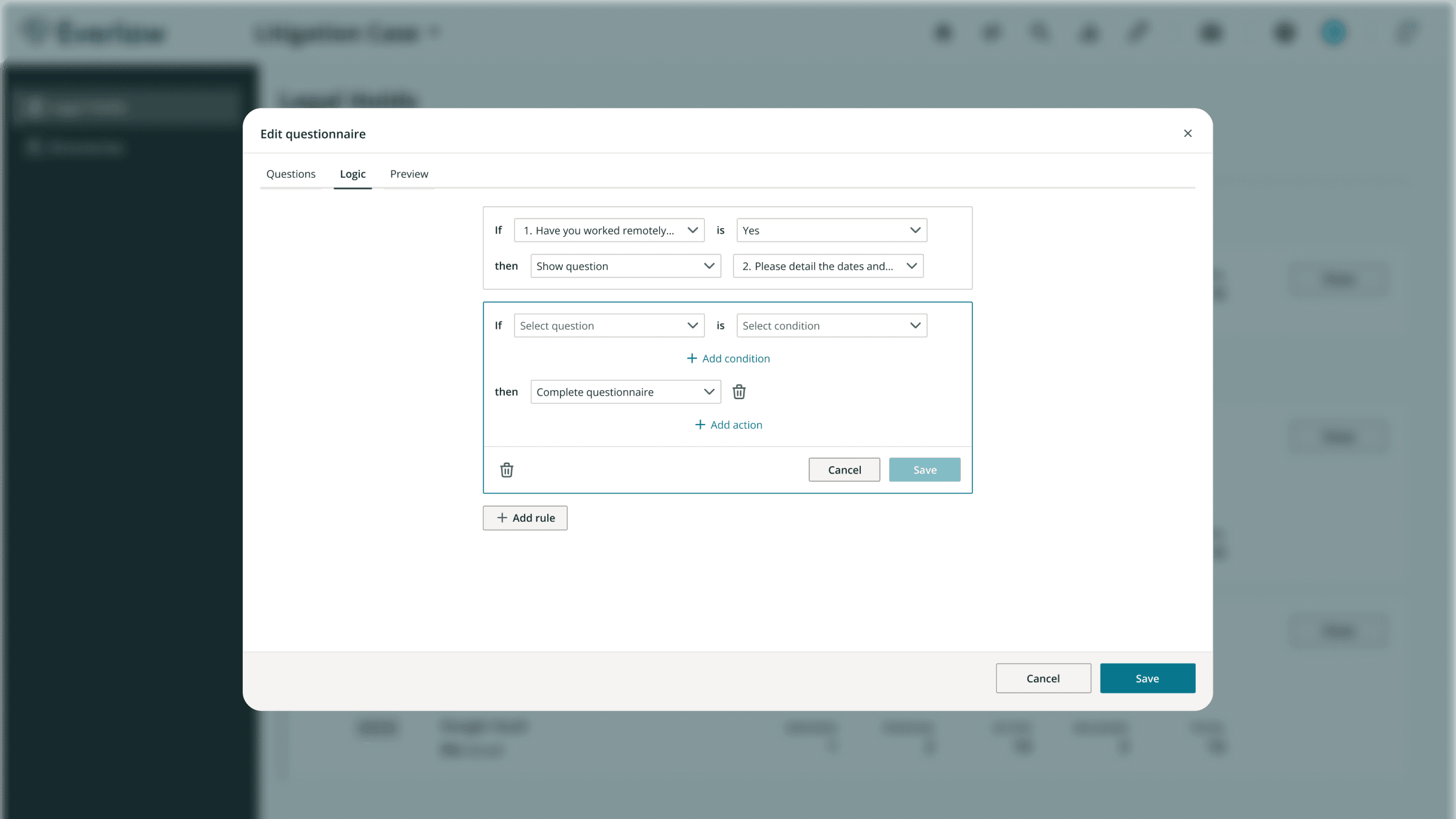
Conditional logic wasn’t a nice-to-have—without it, firms duplicated forms or asked irrelevant questions, which tanks completion quality.
Case study
Impact: Shipped a native questionnaire system that replaced PDFs and unlocked enterprise deals.
Problem
Legal teams issued holds with questionnaires but had no native builder—PDFs, email, and third-party forms broke compliance and tracking.
Solution
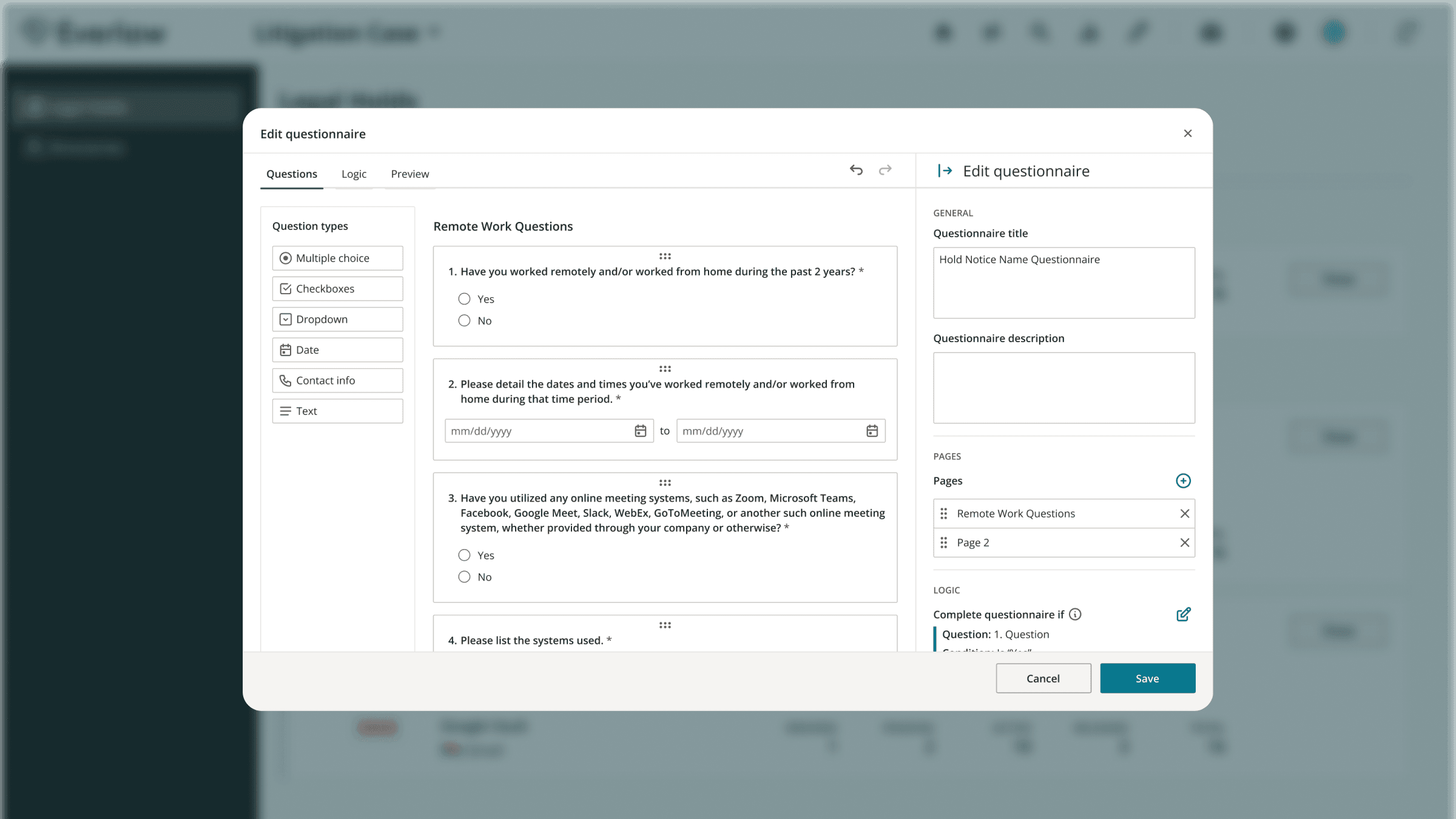
A guided questionnaire builder with logic and templates, plus a custodian portal with autosave—fully inside the hold workflow.
Impact
Strong post-launch reception; positioned Everlaw as enterprise-complete for holds and supported multi-million-dollar pipeline.
Admins needed questionnaires to stand up in the same system as notices, reminders, and audit trails—not as attachments.
Custodians faced long, confusing forms with no clear progress. Admins reconciled responses in spreadsheets and inboxes.
The cost wasn’t just UX—it was defensibility. Disjoint tools make it harder to prove process and consistency under scrutiny.
Methodology: interviews with legal admins and custodians, workflow mapping across hold creation and response, and a competitive scan of legal and form-building tools.
Conditional logic wasn’t a nice-to-have—without it, firms duplicated forms or asked irrelevant questions, which tanks completion quality.
Reuse mattered as much as creation.
Firms run similar holds across matters; rebuilding from scratch wasted time and introduced variance.
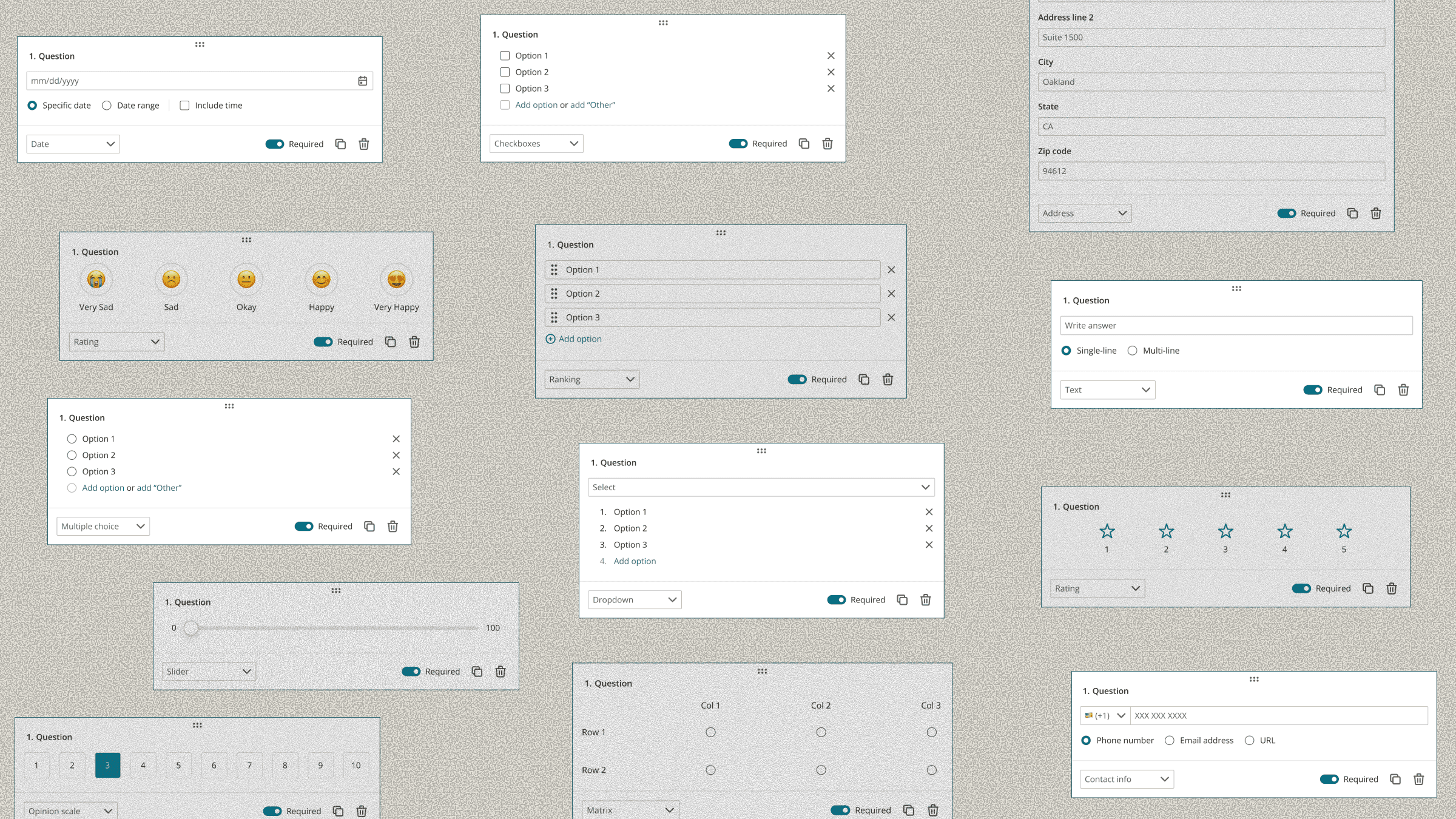
We capped initial question types to cover most holds while keeping the mental model teachable on day one.
Logic shipped as two clear patterns admins could explain to partners—powerful enough for firms, constrained enough to stay supportable.
Templates and copy-from-existing reduced duplicate work and nudged teams toward consistent, reviewable questionnaires.
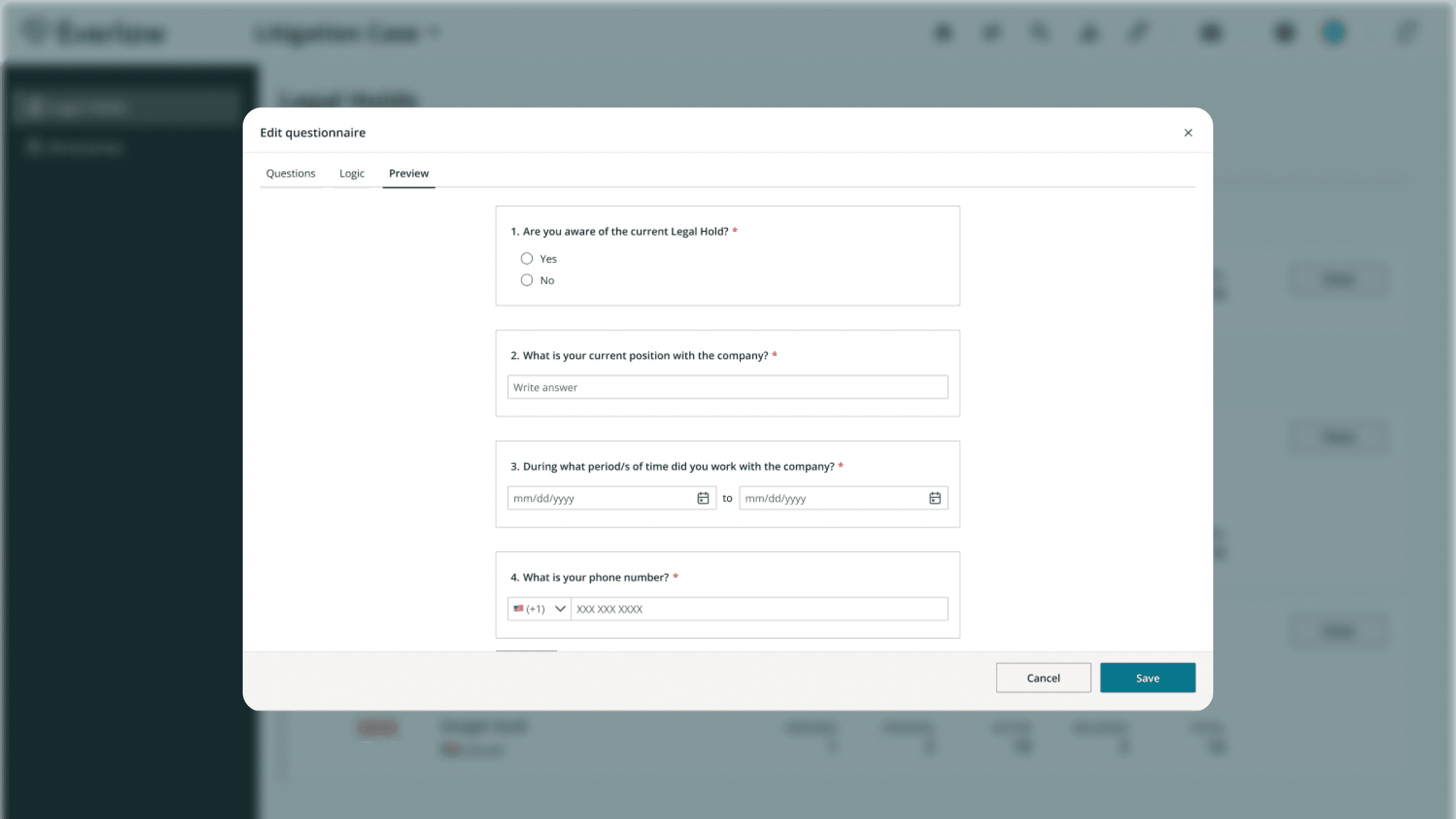
Interactive Figma flows aligned PM, eng, and SMEs early—especially for builder states, error recovery, and preview parity.
Summit reviews surfaced pushback on edge cases we could address before commit: publishing rules, visibility of draft vs live, and custodian re-entry.
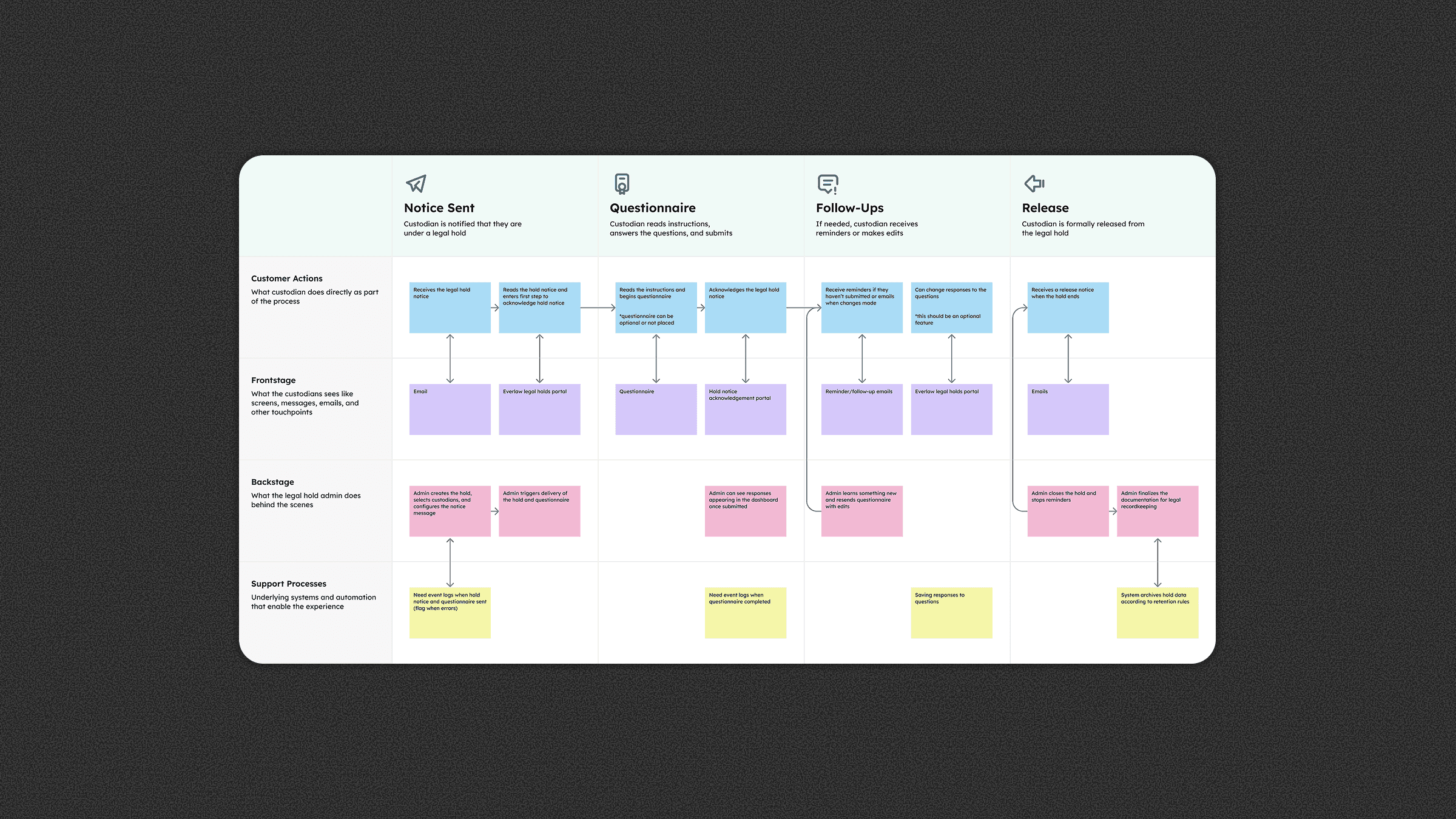
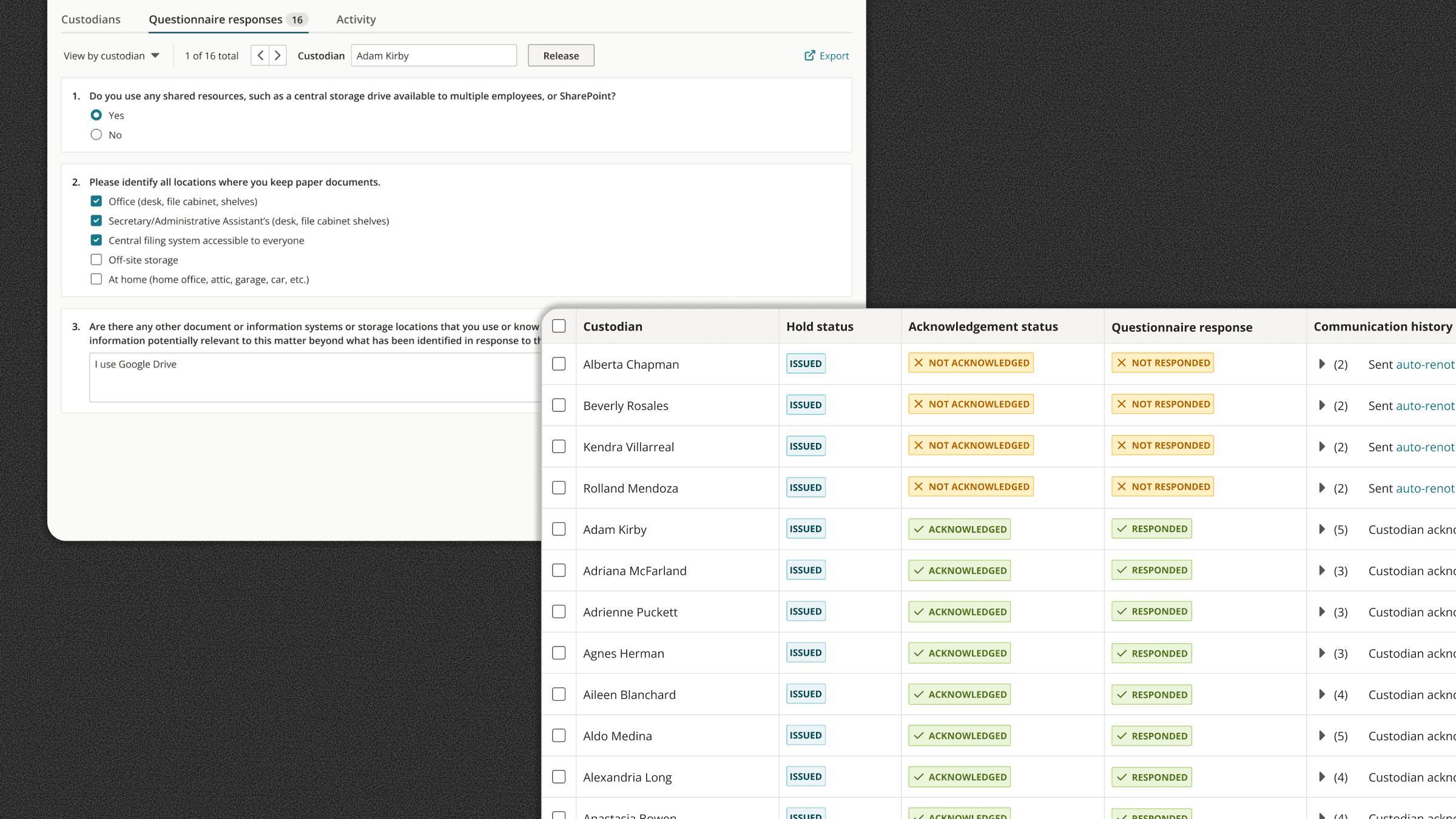
The final flow runs end-to-end: admins build and logic test questionnaires, preview before publish, then track responses in-platform.
Tracking and responses stay in-platform so teams aren’t exporting PII to reconcile answers.
The experience reads as intentional—not a form bolted onto email—so both sides trust the process.
The release replaced fragmented questionnaire workflows with a native, traceable system teams could trust at scale.
Post-launch feedback was strong from both admins and custodians, with clearer completion status and fewer reconciliation handoffs.
The feature also strengthened Everlaw's enterprise readiness for legal holds and supported high-value pipeline conversations.