Legal Holds Questionnaires

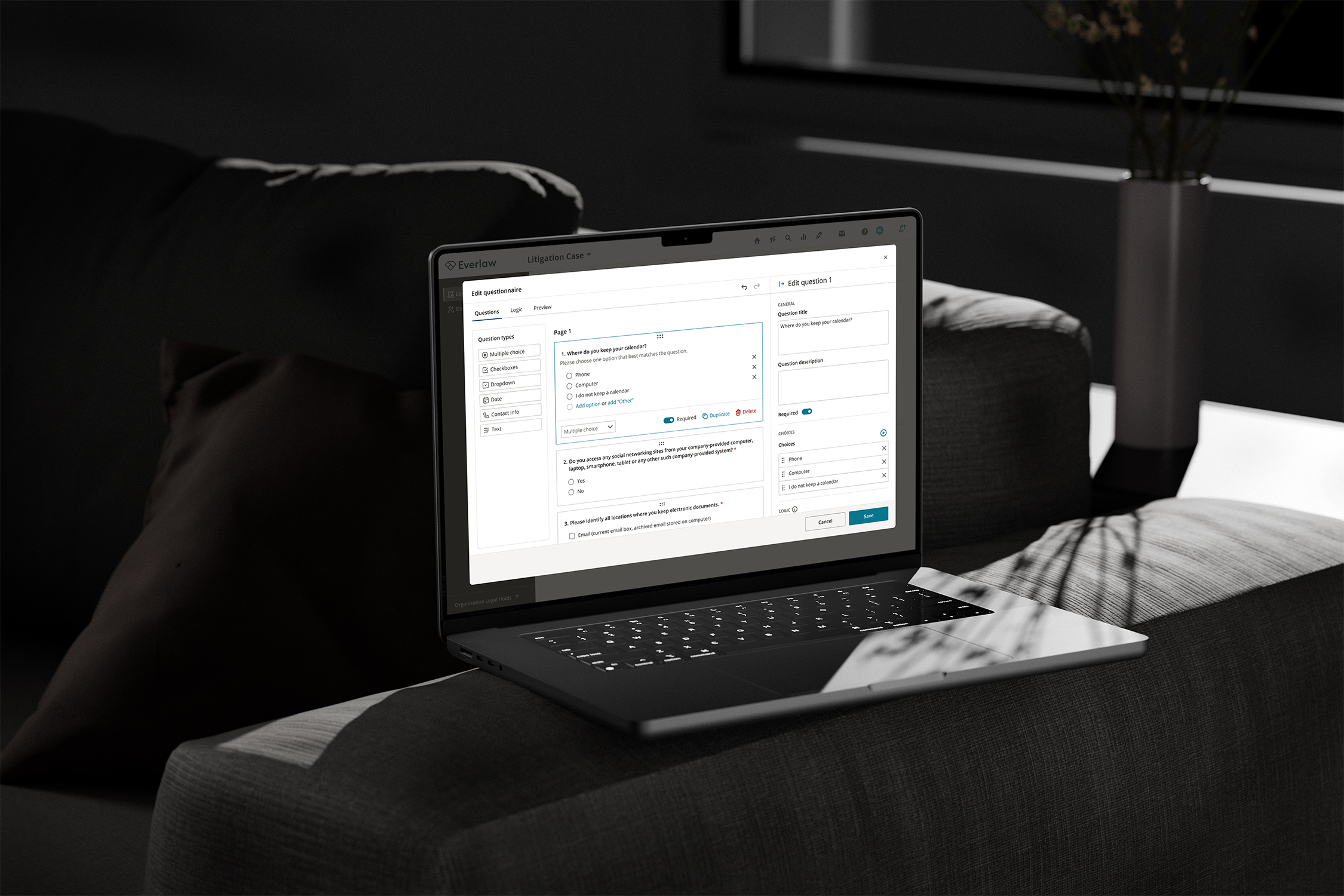
Legal teams often need to issue legal holds—notices to preserve data for potential litigation. These holds are frequently accompanied by questionnaires to collect context from custodians, but Everlaw lacked a built-in questionnaire builder. To address this gap, we designed a guided questionnaire experience.
ROLE
Lead Designer
COMPANY
TIMELINE
1 year
TEAMMATES
1PM, 2 devs
PROBLEM

Lack of a Crucial Feature

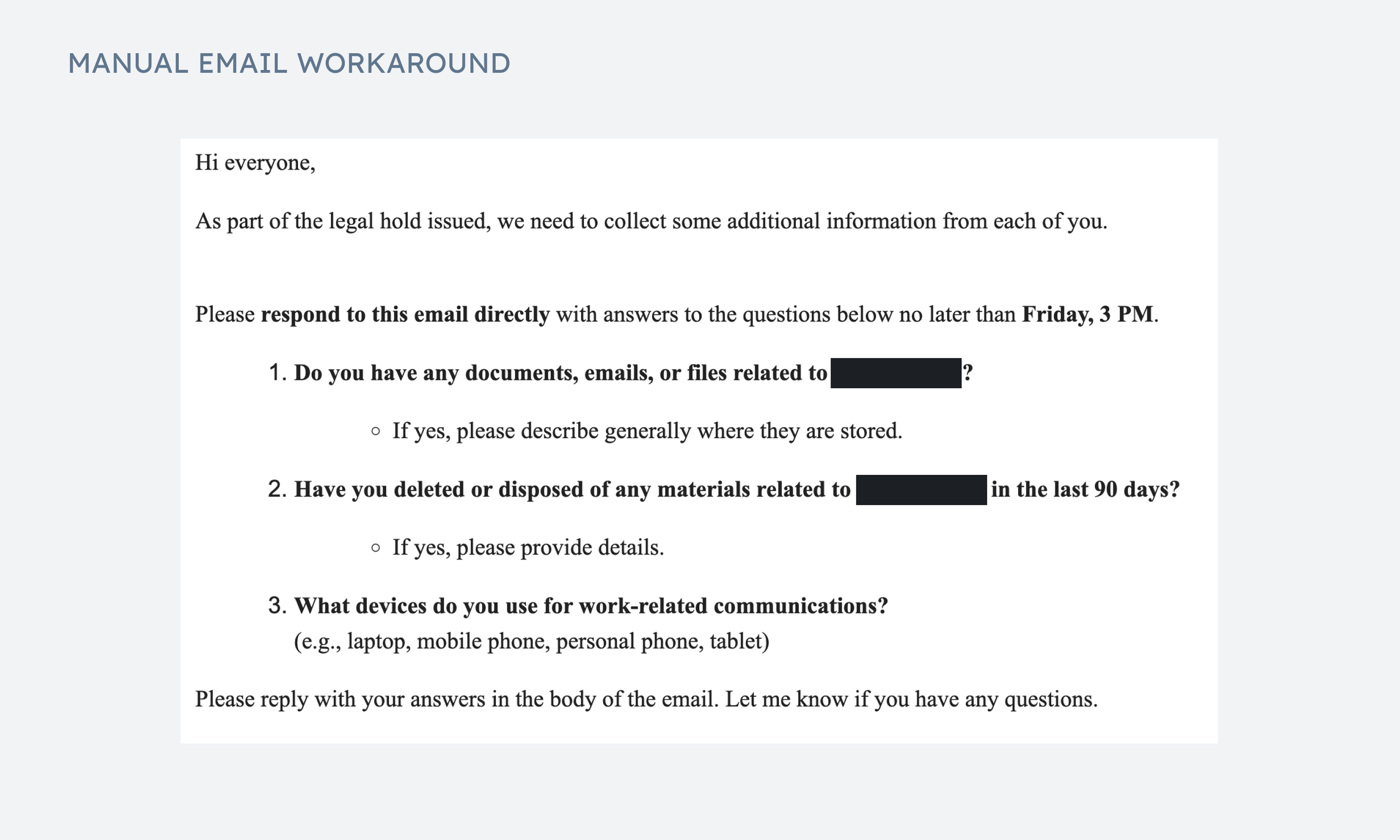
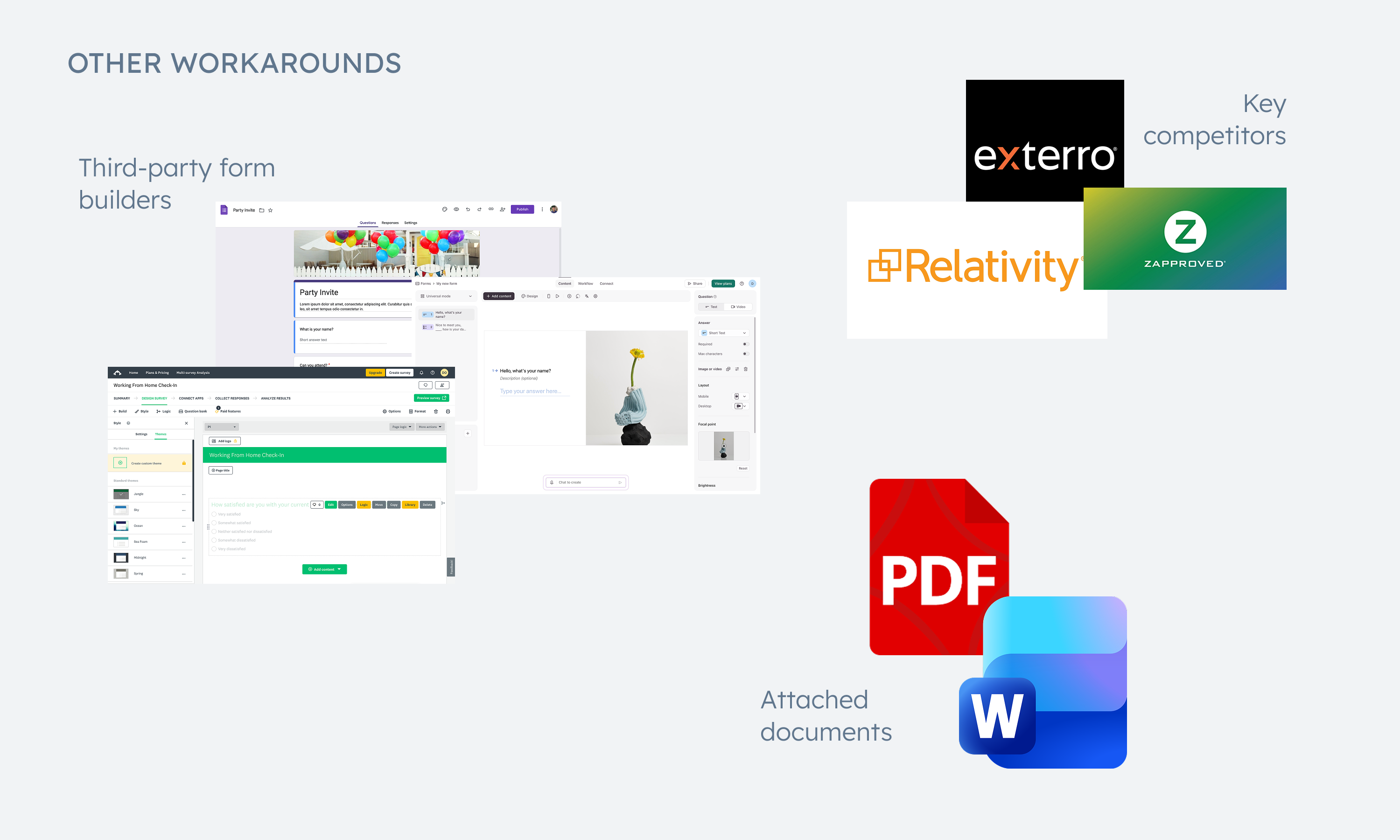
Before this feature, Everlaw’s legal hold administrators faced a fragmented process for creating and distributing questionnaires. Since Everlaw didn’t have a native questionnaire builder, teams were forced to attach static PDFs, rely on third-party form tools, or write questions directly in emails.
This patchwork approach created several pain points. Static or rigid forms created rework and misalignment for law firms. Custodians, or those responding to the questionnaires, felt confused, overloaded, or unsure how to answer correctly, which leads to delays, errors, or non-compliance. Because Everlaw did not have an in-house questionnaire, the steps felt disconnected from the rest of the legal hold process. Custodians receive notices, reminders, and follow-ups in scattered, uncoordinated ways. Admins track everything manually.

These challenges highlighted a clear opportunity: to build a native, guided questionnaire experience within Everlaw—one that integrates seamlessly into existing legal hold workflows and supports both compliance and scale.
How might we enable legal teams to create compliant, reusable, and user-friendly questionnaires—without ever leaving Everlaw?
RESEARCH & DISCOVERY

Uncovering User Needs

Interviews
Interviewed a mix of legal administrators from different firms who regularly issue legal holds. These sessions revealed how fragmented their workflows were and how much anxiety surrounded the process of “getting it right”.
Competitive Analysis
I analyzed several legal tech and enterprise form-building tools (including Exterro, Relativity, and Typeform) to identify gaps and best practices.
Process Mapping
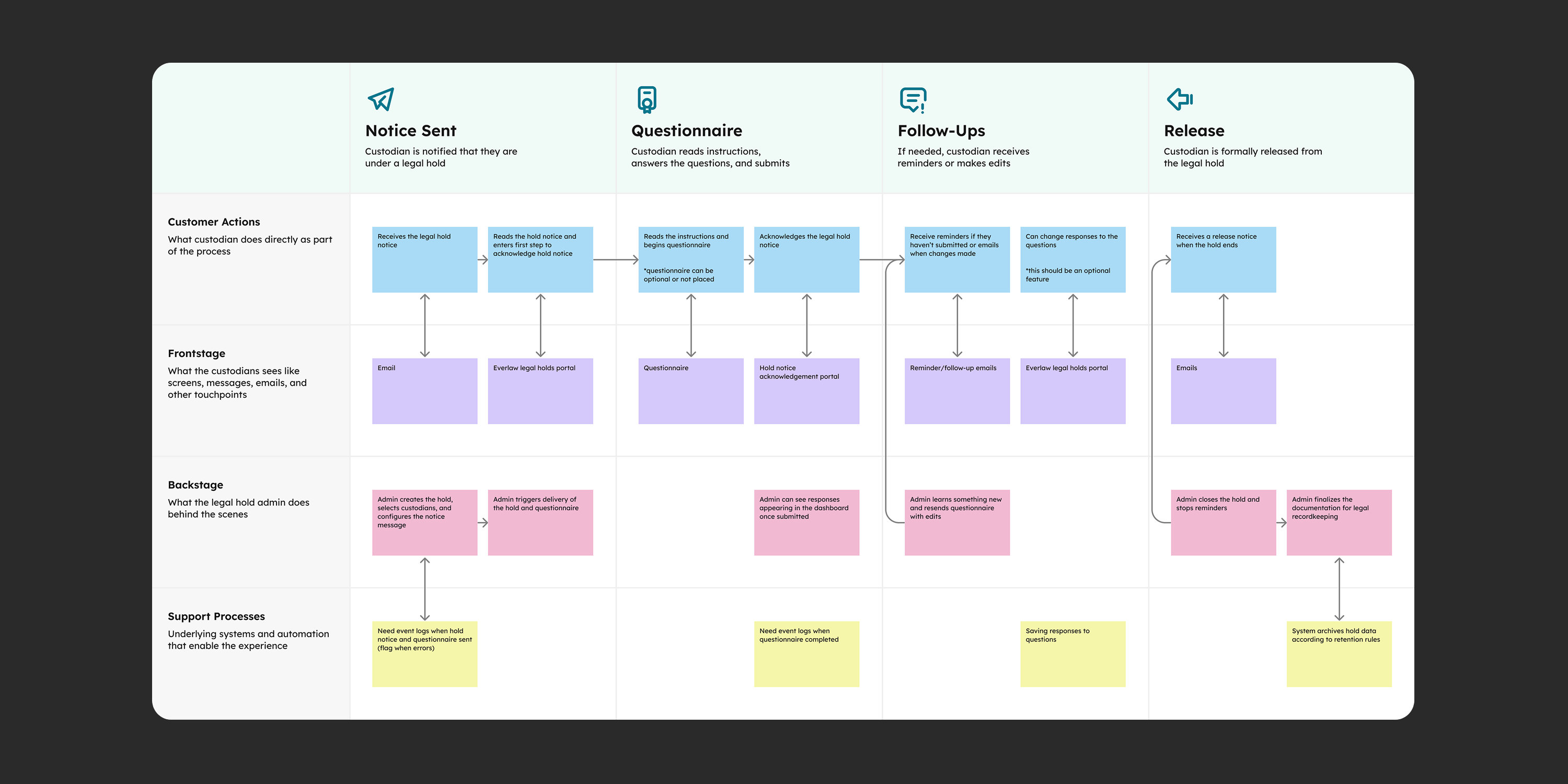
I mapped the current legal hold workflow to visualize where questionnaires fit and where friction occurred. This mapping exercise helped the team identify critical handoff points that highlight opportunities for automation and simplification.
ADMIN EXPERIENCE

Designing the Questionnaire Builder

Question Types
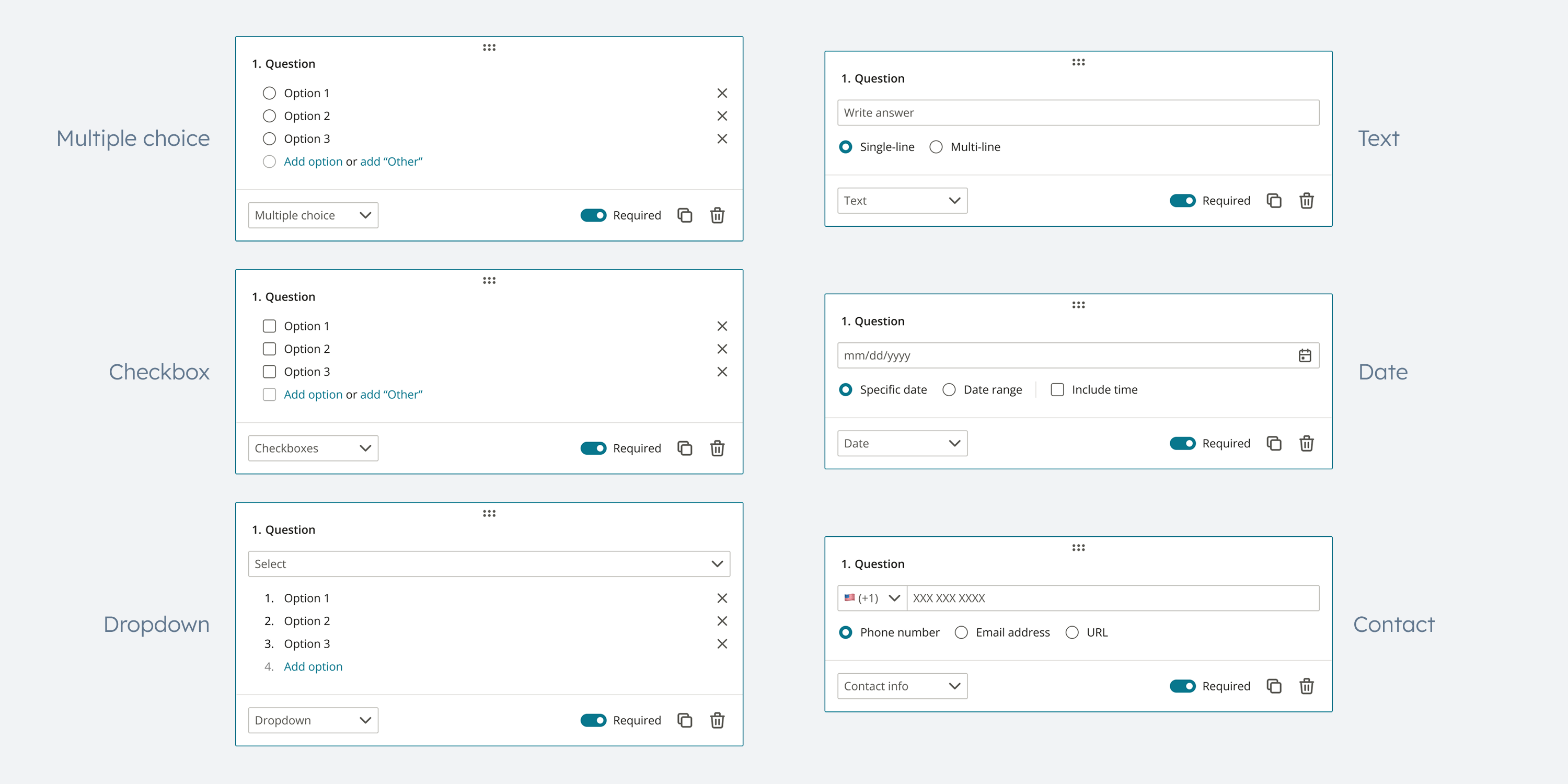
We identified six essential question types that would cover the vast majority of legal hold use cases while keeping the tool simple.
Conditional Logic
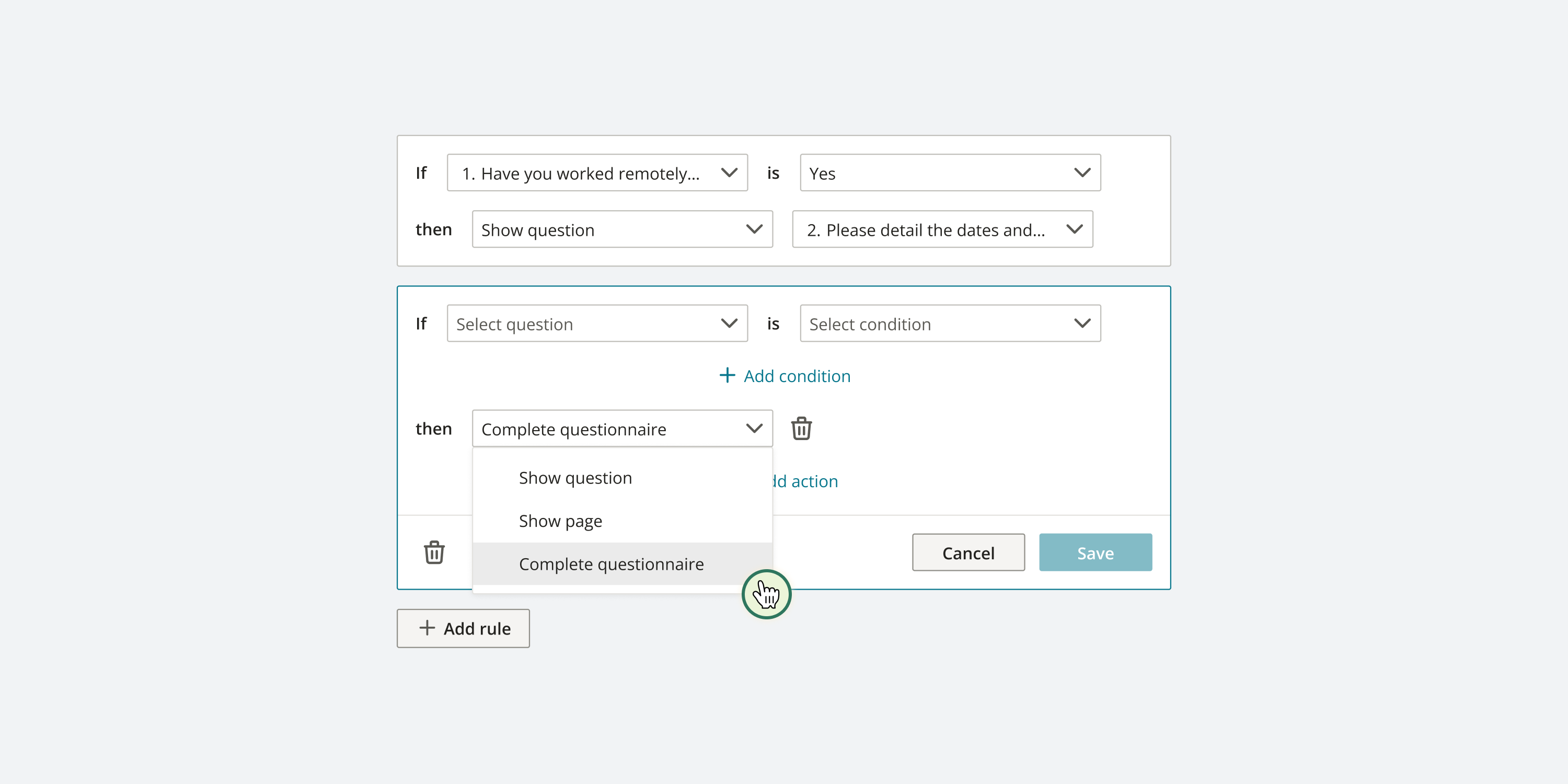
One major pain point surfaced during interviews was the inability to create dynamic, conditional questionnaires. Legal administrators wanted forms that could adapt based on custodian responses — preventing irrelevant questions and improving data quality. Hence, we introduced two key logic patterns.
Reusable Templates
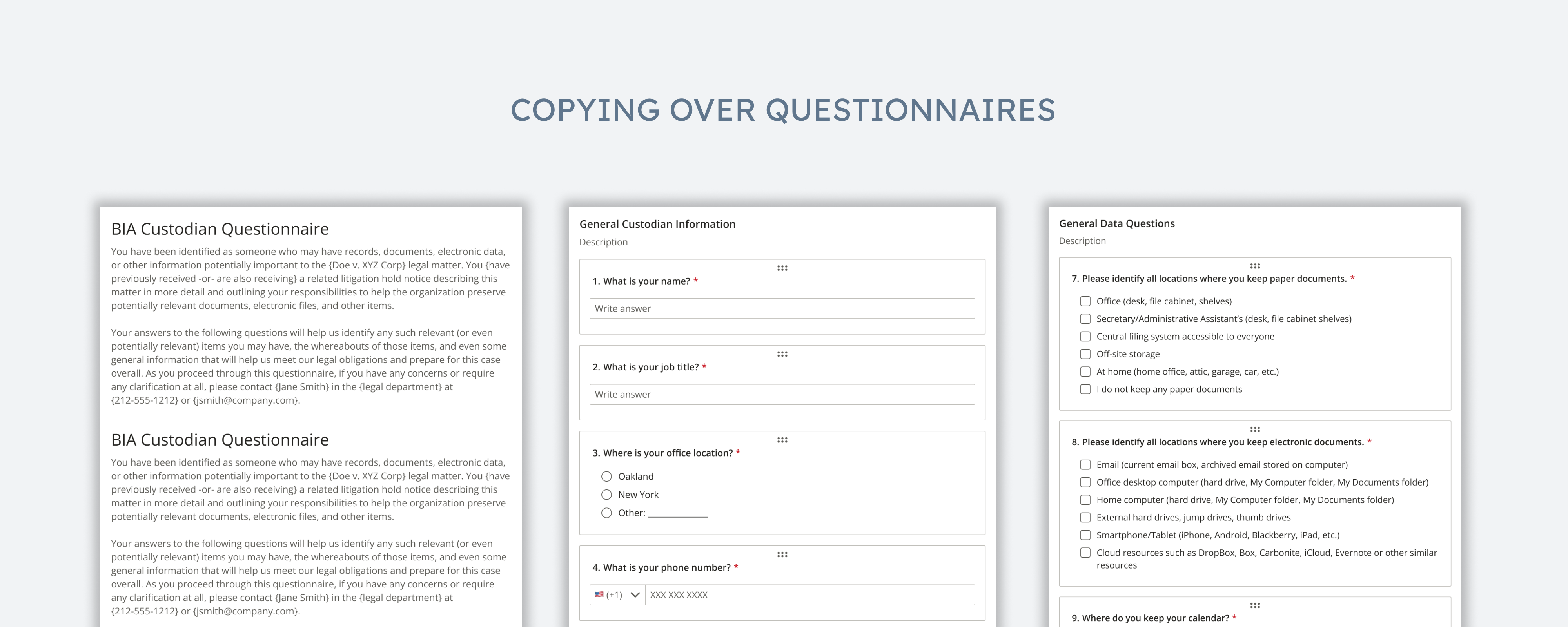
Another recurring theme was efficiency and reuse. Law firms and legal departments often issue similar questionnaires across multiple matters. Rebuilding them from scratch each time led to inconsistency and wasted effort. To solve this, we designed a system where users can copy over questions from existing questionnaires.
CUSTODIAN EXPERIENCE

Completing Questionnaires

End-to-end Designs
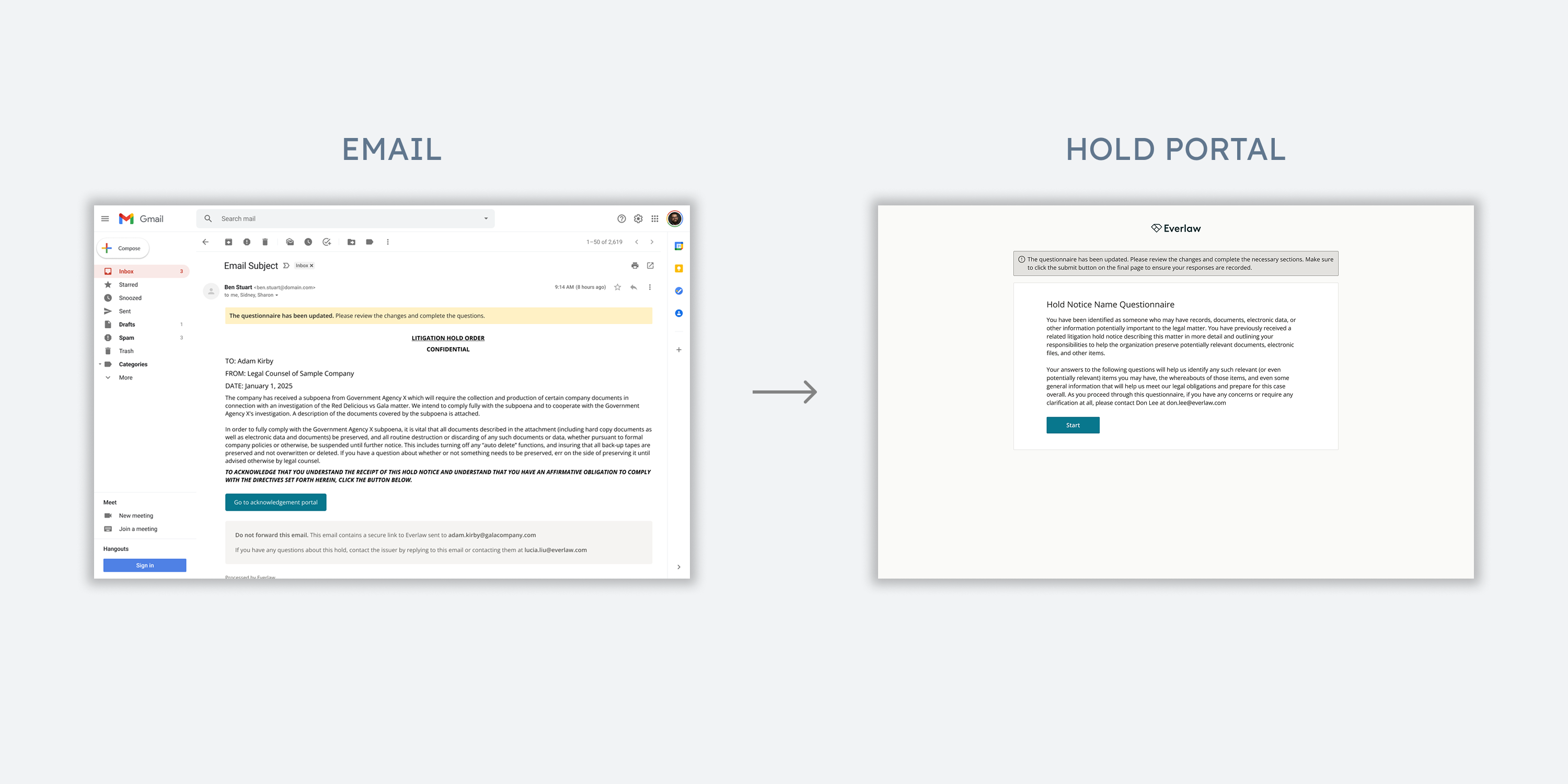
I designed the custodian experience to feel seamless from start to finish. Custodians receive a clear hold notice via email, then move directly into a guided Hold Portal where they can review information and complete the questionnaire with confidence.
Autosaving Responses
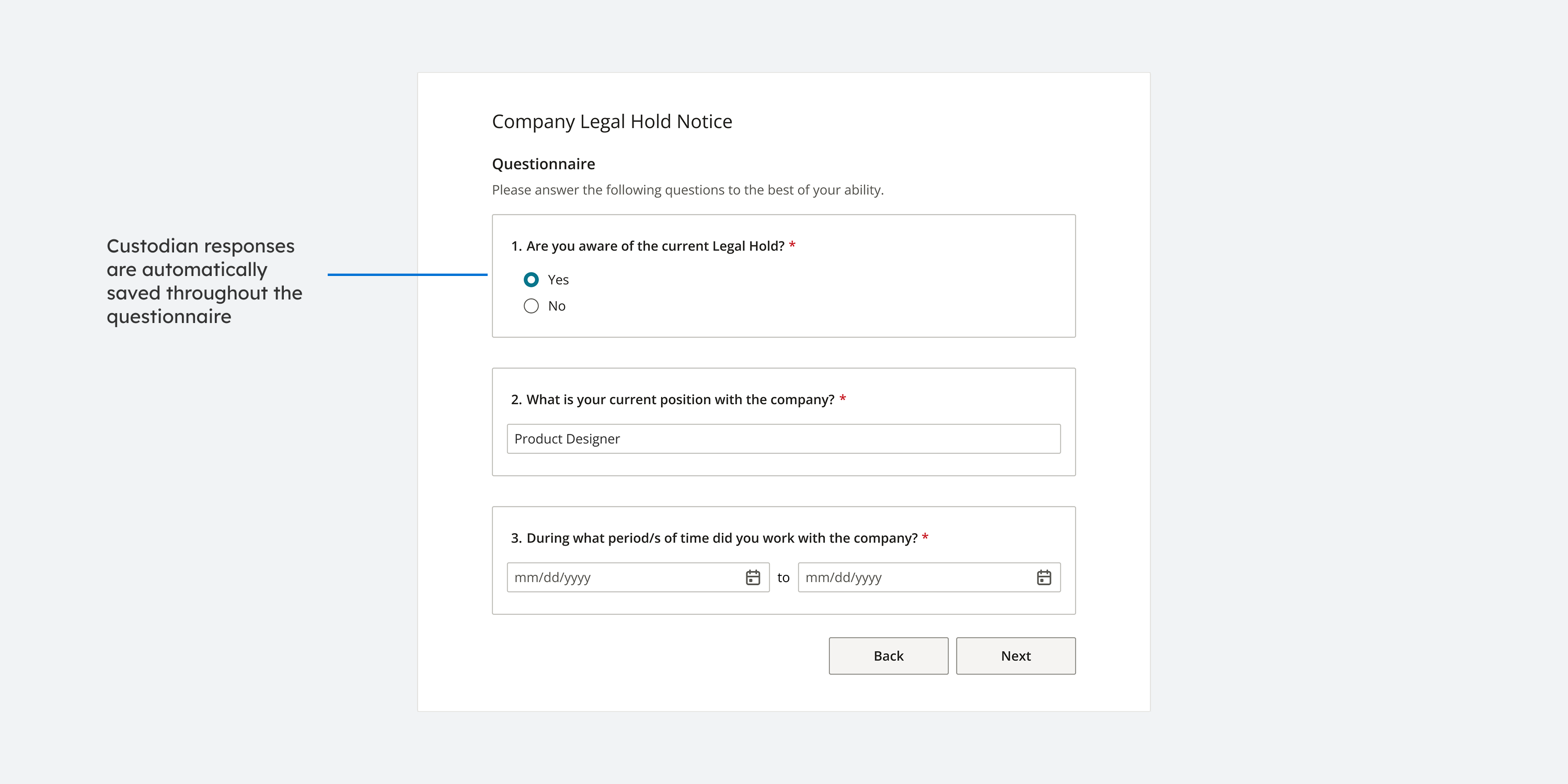
I added autosaving to ensure custodians never lose progress, even when questionnaires are long or their attention is pulled away. This allows them to pause and return at any time, making the experience flexible and stress-free.
PROTOTYPING

Seeking User Feedback

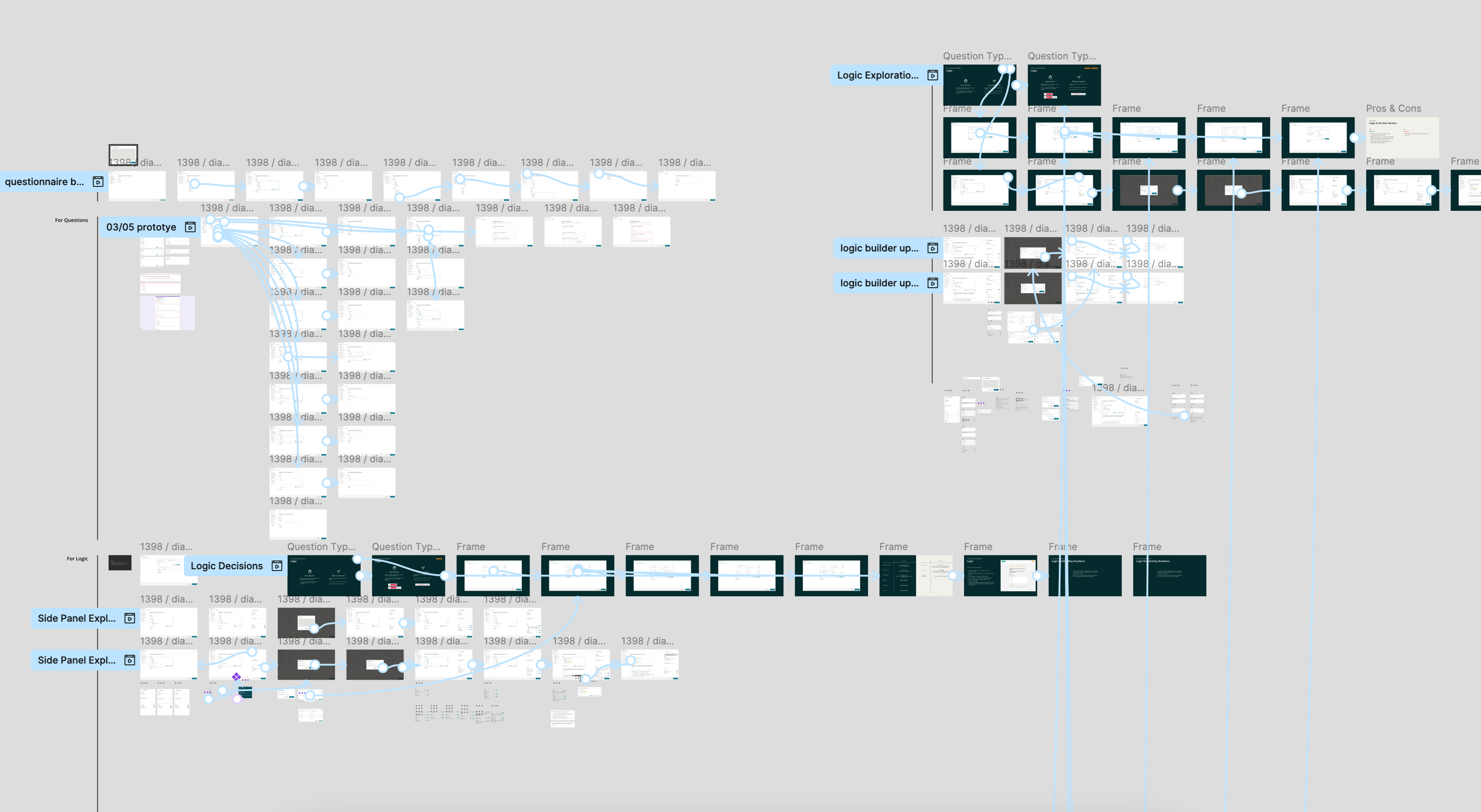
We built interactive prototypes in Figma to validate our concepts and test usability early. These prototypes showcased the entire questionnaire creation flow—from defining questions and logic to previewing and publishing—and were used both for internal reviews and external presentations.

To gather feedback and build alignment, we presented the prototypes during Everlaw’s annual Product Summit, where product managers, engineers, and legal subject matter experts provided real-time input. This visibility helped secure stakeholder buy-in and accelerated decision-making across teams.
KEY FEATURES

Everlaw's built-in questionnaire

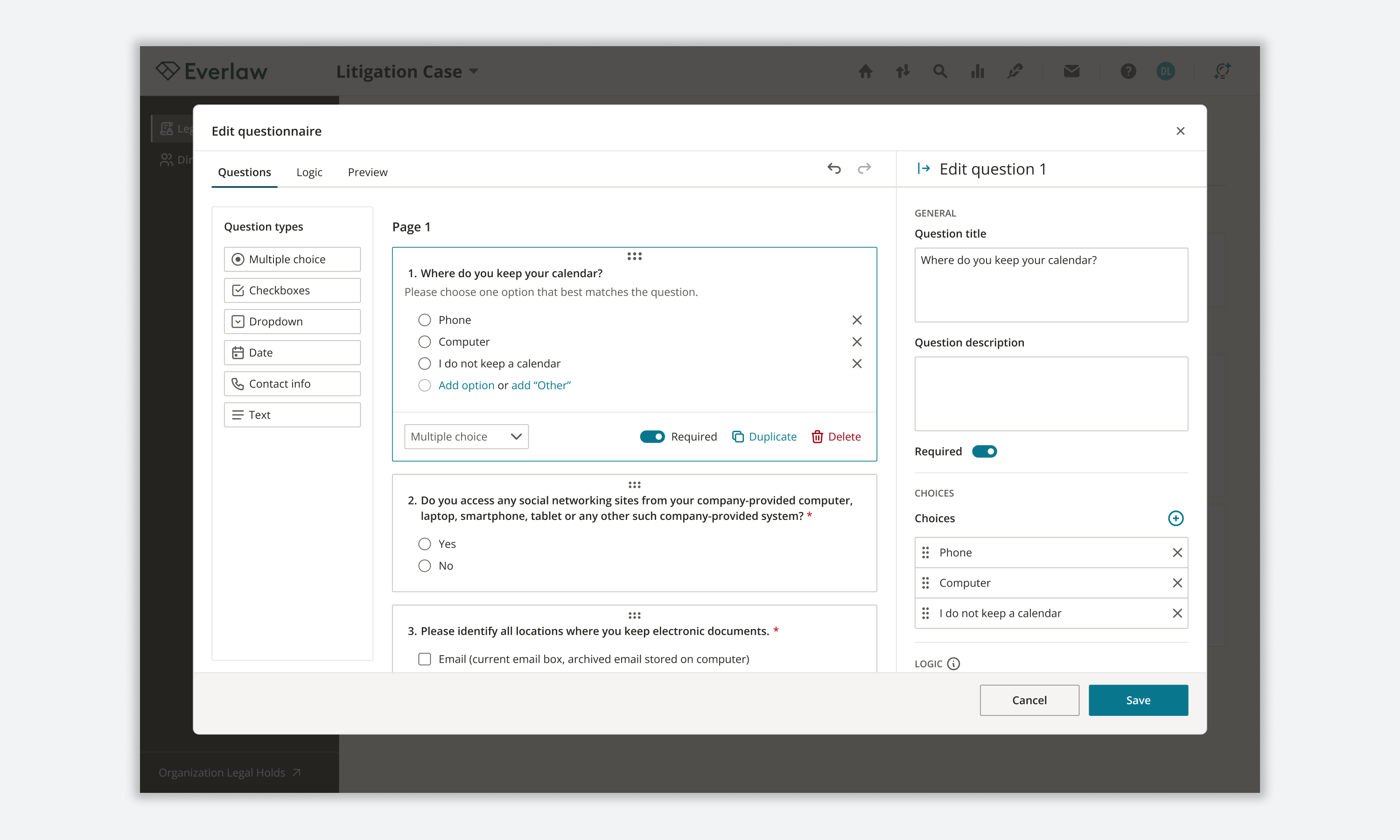
Questionnaire Builder
The new builder offers a clean, guided interface that allows legal teams to create questionnaires quickly and confidently. Users can add, reorder, and customize questions with intuitive controls while maintaining full visibility into structure and progress.
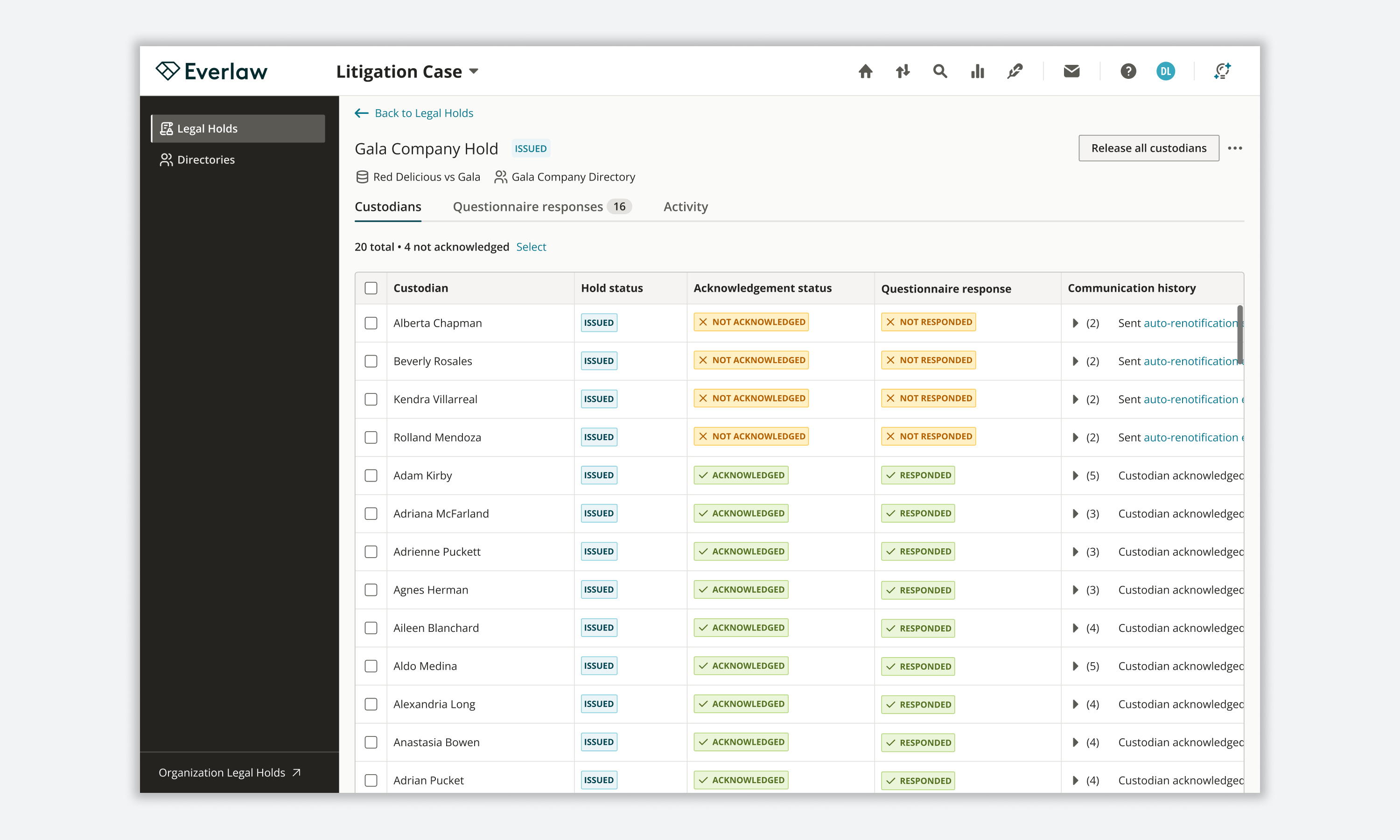
Custodian Tracking
The custodian tracking table gives administrators a clear, real-time view of who has received, opened, and completed their questionnaires. With statuses and timestamps surfaced in one place, legal teams can easily monitor compliance and follow up when needed.
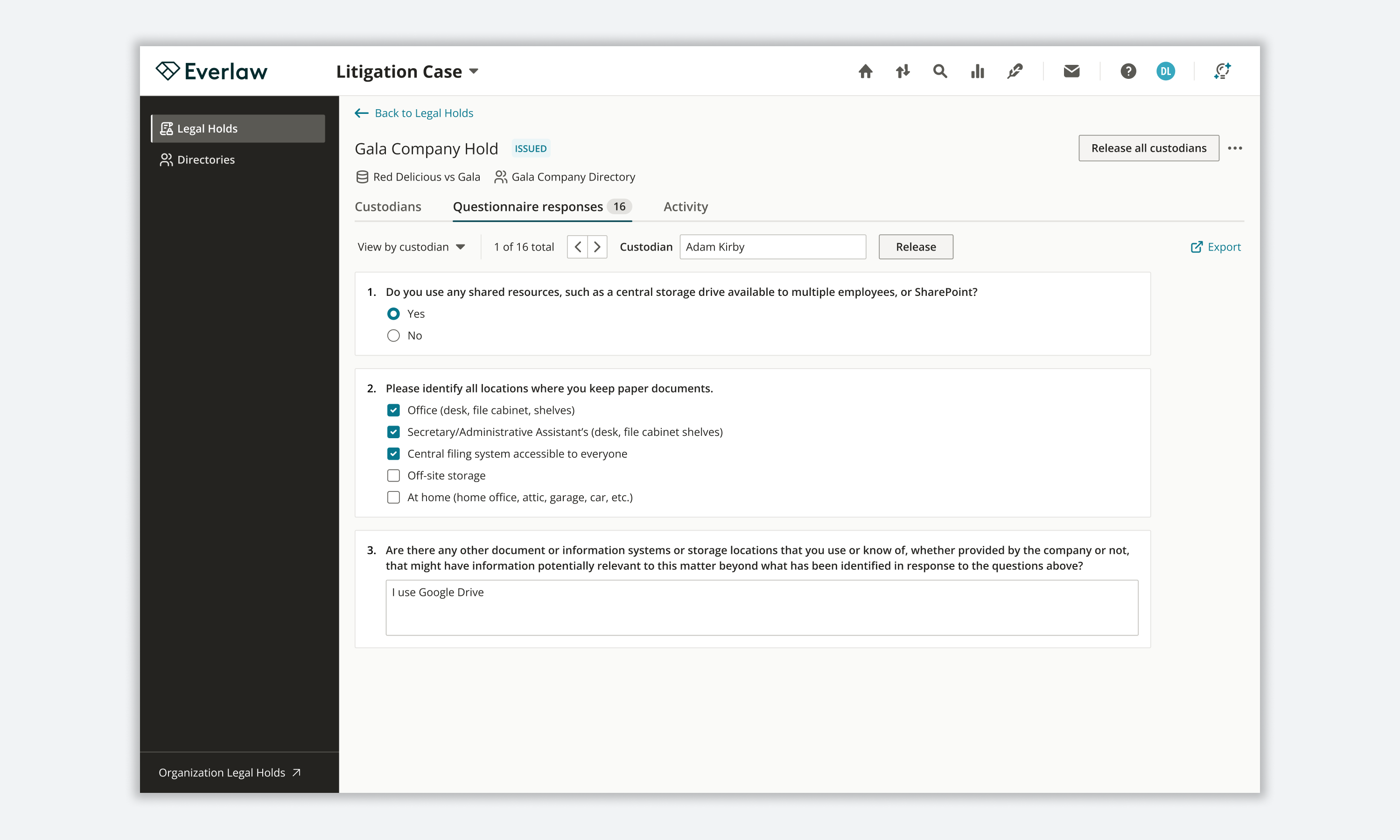
Questionnaire Responses
Administrators can review questionnaire responses directly within the platform, eliminating the need for external tools or manual consolidation. Responses are displayed in a clean, structured format that supports quick analysis and accurate recordkeeping.
IMPACT

Launch and Initial Reviews

After more than a year of collaboration, iteration, and focused execution, Legal Hold Questionnaires officially launched.
This feature not only elevated the experience for both administrators and custodians, but also strengthened Everlaw’s position as a comprehensive, enterprise-ready legal hold solution. The reception was overwhelmingly positive, and the release directly unlocked several multi-million-dollar enterprise deals for the company.
NEXT STEPS

Ensuring Long-Term Excellence

Continue Talking to Users
We will keep engaging directly with administrators and custodians to understand real-world challenges, validate assumptions, and guide iterative improvements across the questionnaire experience.
Analyze Performance Metrics
By tracking key data points on Heap—such as completion rates, time to completion, and logic usage—we can identify friction at scale and make informed decisions about where to refine or expand functionality.
Monitor the Legal Landscape
As preservation standards and regulatory requirements evolve, we will continue researching industry developments to ensure the questionnaire system remains compliant, defensible, and aligned with best practices.
Go back home
or reach out to me if you'd like to learn more about this project.